

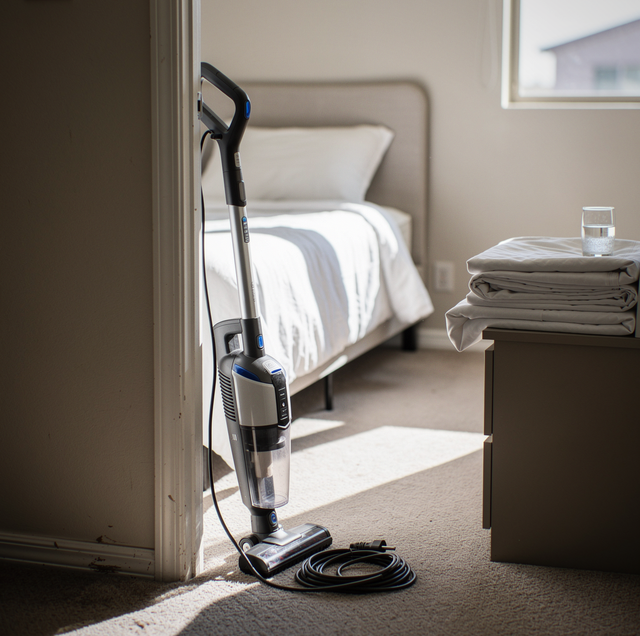
The stick vacuum leans against the bedroom doorframe the evening after the first treatment, charged and ready. Everyone came home after 4 hours away; clean sheets went on the bed, and the room looked close to normal again. Running the vacuum around the edges, or mopping so the house feels finished, seems like the obvious next step. Whether that fits your home is a call for John, and the reason to ask before cleaning is which surfaces were treated and why the next two weeks matter.
The Surfaces Your Cleaning Would Reach
The first treatment was applied by hand throughout the whole home, using a sprayer and a duster. Beds, couches, recliners, and every other piece of furniture were treated, along with the baseboards in every room. On those surfaces, the treatment leaves a residual that keeps working for several months, and that residual is the part of the job meant to address what the visit could not reach.
That list is where the question about cleaning comes from. Housework and treated surfaces meet in predictable places:
- A vacuum head rides along the baseboard as it follows the wall.
- A wet mop knocks against the baseboard on every stroke near the edge.
- A dust cloth passes over the arms of a couch, the rails of a bed, and the top of a dresser.
- Carpet shampooing runs the full width of a room, up to the wall.
Each of those jobs is ordinary, and each one lands on a surface that was intentionally treated. The open middle of a floor is a different spot from the baseboard edge. How John worked through your home was determined by the plan he made during the inspection, so the floor belongs on the list of things to ask about, too.
The Instructions You Already Have for the Two Weeks
The treatment steps cover the time between visits in a few plain lines. Leave as much of the prep in place as you can, bagged clothes included. If something worries you, call John. Keep the clutter cleared from the treated areas from drifting back, since a weekend of tidying that returns boxes and piles to the bedroom floor undoes what the prep took away.
Not one of those lines gives a rule for vacuuming, mopping, wiping, or shampooing, in either direction. Nothing in them says to lock the vacuum in a closet, and nothing says the floors are fair game the next morning. If John gave you a cleaning instruction during your inspection or on treatment day, that instruction applies to your home. If he did not, the gap is a question for him. Guessing in either direction puts your judgment in place of the person who planned and applied the treatment.
Housework that never touches a treated surface, such as washing dishes or wiping a kitchen counter, sits outside the question altogether.
What the Two Weeks Between Visits Ask of the Floors
Young bugs that hatch between the visits have to come out to feed, and their routes run across furniture and along baseboards, the surfaces the plan counts on for the full stretch. That puts the baseboard edge and the furniture at the center of any cleaning decision until the second visit, and it is why a short call to John beats a guess.
Questions to Put to John Before You Clean
A short call settles more than any rule of thumb. Go in with three things ready, so his answer fits your home:
What you want to clean: Name the tool or the job: a stick vacuum, an upright, a wet mop, a dust cloth, a carpet shampoo. A dry pass and a wet one are separate questions, so list both if you plan both.
Which surfaces it touches: Say whether the job stays in the open middle of a floor or runs along baseboards, and whether it reaches any furniture, such as the bed frame, couch, or recliner.
How soon: Say whether you want to do it this week, before the second visit, or after it. The answer can differ between those windows, and asking about each saves a second call.
Then ask the follow-up that matters most in the weeks ahead: whether his answer changes after the second visit. Write down what he says, along with the date, so the whole household works from the same instruction.
If more than one person in the home does the cleaning, make the call with all of them in earshot, or pass along John's exact words the same day. One person running a mop along the baseboards undoes the point of asking.
Treated Surfaces to Leave Until He Answers
Until you have his answer, the jobs to hold are the deep ones that put water, a cloth, or a brush straight onto treated surfaces. That means shampooing the carpet, wet-cleaning the baseboards, and wiping down the bed frame, couch, or other treated furniture. Those jobs belong on John's list and off the weekend chore chart for now.
Holding them is a matter of order. Once John has told you what fits your home, you can plan around his answer with confidence. Before then, the treated surfaces are part of a job still in progress, with a second visit on the calendar and residual work ongoing across every room.
Cleaning Once the Second Visit Is Done
The second visit is the easiest moment to ask, because John is standing in the home and can look at the surfaces you mean while you point to them. Bring the same three points: what you want to clean, which surfaces, and how soon.
The residual does not stop on the day of the second visit. It keeps working for several months after treatment, so the treated baseboards and furniture continue to do their part after that date. The cleaning question remains the same, asked at a better time and to the person best placed to answer it.
The bagged laundry stays bagged until the service is completed, which means until after the second visit. Knowing the problem is solved comes later still: the sign is that the activity stops. If you see a bed bug after both visits, call John, and the warranty year covers the return.
Wanting to clean after treatment is a healthy instinct, and it marks the point where a household starts to feel like itself again. Give it one short delay. Let the person who planned the treatment say how housework fits around it, then pick up the vacuum with his answer in hand.
Frequently Asked Questions
Yes, until you have asked John. A robot vacuum runs on its timer whether anyone is home or not, and models with a spinning side brush sweep that brush along the wall edge, right where the baseboard meets the floor. Switching off the schedule keeps it from working the treated edge before you have his answer.
Count it as part of the baseboard. In some homes, a small rounded strip, called shoe molding or quarter round, is nailed along the bottom edge to cover the gap between the baseboard and the floor. A mop head and a vacuum nozzle ride against that strip first, so mention it when you describe your cleaning.
Yes, before the visit. A standard cleaning visit can include dusting baseboards, wiping furniture, and mopping right up to the wall, and each of those reaches a treated surface. Postpone the visit or hand the cleaner John's answer first, since a cleaner's routine knows nothing about your treatment.
It reaches the carpet in a different way. A carpet extractor pushes water and detergent down into the pile and pulls most of it back out, and its edge passes right up to the baseboard, leaving the carpet edge damp for a while. Name the machine when you call, since wet and dry cleaning are separate questions.
It does. Plain water still wets the floor edge and the bottom of the baseboard wherever the mop touches, so name it the same way as a bucket with cleaner in it when you ask John.
It can, so name it when you call. A crevice tool is shaped to reach into corners, along edges and down between cushions and frames, which puts it on the furniture and baseboards the treatment covers. Tell John which attachments you plan to use along with the vacuum itself.
Hold the mop and the carpet shampoo until you have asked John — a short conversation gets his answer on how cleaning fits your home between the two visits. Bed Bugs Arizona serves Phoenix and towns across Arizona. Call 623-451-0541.