

On the hook beside the office door hangs the master key ring, heavy with brass, and stuck to the wall just under it is a yellow square of paper with two unit numbers in the manager's handwriting. One number has a pen circle around it: the unit where a tenant found a bed bug on a pillowcase this morning. The other number sits bare. It belongs to the unit that shares a wall with the circled one, which is why the manager keeps glancing at the note. If the circled unit gets treated, does treating one apartment push bed bugs into the next unit, the one that has never had a complaint?
The answer has two halves, and both matter. The treatment does make a bed bug move: the product bothers it, and it tries to get off the spot. The surfaces it crosses on the way carry that same product, and that is what kills it. Whether any single bug ever reaches the unit beside it is something nobody can promise either way, which is why the neighboring unit is weighed on its own facts.
Why the Worry Comes Up
The worry rests on something true. Bed bugs spend the hours between meals packed into tight gaps close to where people sleep and sit, and they move when something disturbs those gaps. A manager who pictures a treatment as one big disturbance pictures the obvious result: bugs leaving the circled unit by whatever route they can find, and turning up in a bedroom that was quiet last week.
That picture only fits a building where homes are joined. In a complex of apartments, or in condos and townhomes set side by side, the unit beside the reported one is close enough that it can be part of the question at all. In a detached rental house, the question never comes up, because the treated home has no neighbor on the other side of a wall.
The question deserves a straight answer for a practical reason. It shapes what a manager says to two households at once: the one with the report and the one without, and the second household will ask.
A Disturbed Bed Bug and the Treated Surface
The product used in the circled unit does provoke movement. A bed bug that touches it becomes irritated and tries to leave. That reaction is real, and a manager who hears it described plainly is in a better position than one who was told the bugs simply die where they sit.
What determines the outcome is the ground beneath the bug as it leaves. The product dries to a residue on the surfaces it was applied to, so a bug crawling off one treated piece of furniture can encounter another treated surface along its path, at the next piece of furniture or the baseboard. Contact with that residual is what kills it, and for a bug that never leaves the unit, the escape attempt and the kill can happen on the same treated ground.
A bug that the spray never touched keeps its own schedule. Bed bugs feed on people, so sooner or later a hidden bug has to leave its gap and head for a bed, a couch or a recliner where someone rests. That walk can cross treated wood, fabric, and trim before it reaches anyone, since the beds, couches, and baseboards along its path were treated.
That does not rule out a bug slipping past the front door, and nobody should claim it does. It does explain why the movement a treatment causes differs from that of a bug wandering through a home nobody has treated: the furniture and baseboards it can reach along the way carry the product as well.
How the Residual Bears on the Unit Next Door
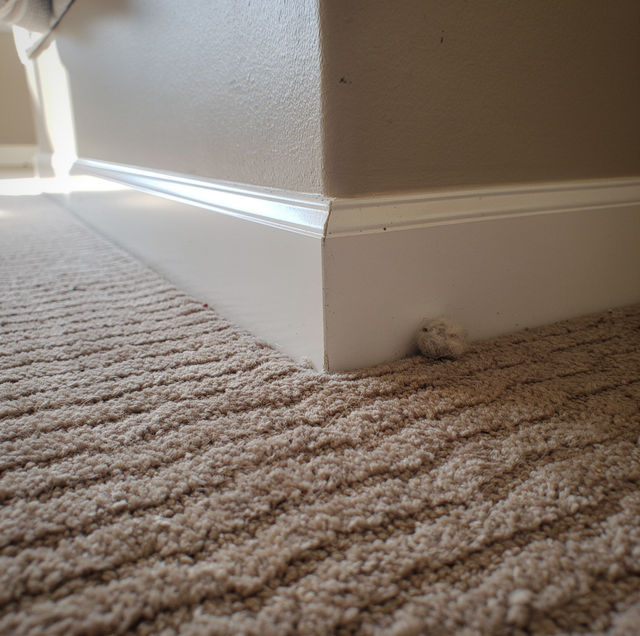
The circled unit is treated end to end: every room, every piece of furniture, and the baseboards along the bottom of each wall, all applied by hand. The baseboards bear directly on the manager's question. They trace the edges of each room, including the side of the unit it shares with the neighbor, and a bed bug crossing a room can travel along the seam where floor meets wall. With product on that trim, the edges of the unit are treated ground too.
The residual also outlasts the visit. It keeps working on those surfaces after the treatment is finished and kills bed bugs at every stage, so a bug that stays tucked away through the visit and moves days later still meets it.
Whole-unit coverage means a disturbed bug in the circled unit is never far from a treated piece of furniture or a treated baseboard. An apartment is never handled as a single room or a mattress alone, so there is no half-treated version of the unit for bugs to retreat into. That is the core of the reassurance, and it describes the reported unit once it is treated, with no guarantee attached about the neighbor.
Limits on Any Promise About the Neighbors
The residual sits only where it was applied. It stops at the circled unit's door, and the unit beside it receives no product. A bug that leaves the treated unit by some route walks onto surfaces that were not treated, and the treatment has no further say in what happens to it.
So the position has limits on both sides. Nobody can promise the household next door that no bed bug will ever cross over, and nobody can tell the circled tenant that the treatment pushed bugs next door either. Each of those statements claims more than anyone knows on the day of treatment.
What a manager can say with confidence is narrower and still useful. The reported unit is being treated in full. The product works on bugs that try to leave. The unit beside it will be judged on its own facts, and if that household ever sees a bug, bites, or spotting, their report gets its own inspection.
The Manager's File and the Unit Beside It
Whether the unit beside the circled one gets a look is settled at the inspection, based on what the reported unit turns out to hold and what the manager's records show.
The manager holds much of that history in files no inspection can see: earlier reports from either unit, past treatments and roughly when they occurred, and a tenant who moved out of the neighboring unit after a complaint. Bring them to the first conversation.
When a look next door is recommended, getting into that unit is management's responsibility, as with any unit, and the inspection is free like any other. When it is not recommended, the neighboring household is not part of the job, and the bare number on the note stays bare.
The circle on that note marks where the work starts. Treat the reported unit completely, keep the neighbor's file within reach, and leave the second number bare until the inspection gives a reason to circle it.
Frequently Asked Questions
It is applied with a hand sprayer and a hand duster onto surfaces inside the treated unit. Nothing is released to drift through the building, and what dries in place stays on the surfaces it was put on, inside the unit that was treated.
It does. Leave it where it sits and tell John before the inspection. A couch or mattress set in a shared hallway or a storage room has left the unit, so it sits outside the area the unit's treatment covers and beside space other households use. The inspection determines how it is handled along with the unit.
It changes who would notice. With nobody sleeping there, nobody wakes up to marks or finds a bug on the sheets, so silence from an empty unit says nothing about what it holds. Mention the vacancy when you call, so it is weighed with everything else.
Hold off on anything aimed at bed bugs in the neighboring unit until someone has inspected it. A spray there before anyone has looked can leave that unit harder to read, and the inspection is the step that decides whether it needs anything at all.
It can. A unit sitting directly over or under the reported one adjoins it as surely as the one beside it, so tell John which units sit above and below as well as beside, and the inspection weighs any of them.
Bare decking, concrete and railings give a bed bug almost nowhere to tuck in. An outdoor cushion, a lounger with a fabric seat, or an old couch kept out there is a different matter, since a bug can rest in its seams, so mention any upholstered piece on it.
Coordinate a free inspection of the reported unit — get that unit treated in full and a reasoned answer on whether the one beside it needs a look. Bed Bugs Arizona serves Phoenix and towns across Arizona. Call 623-451-0541.