

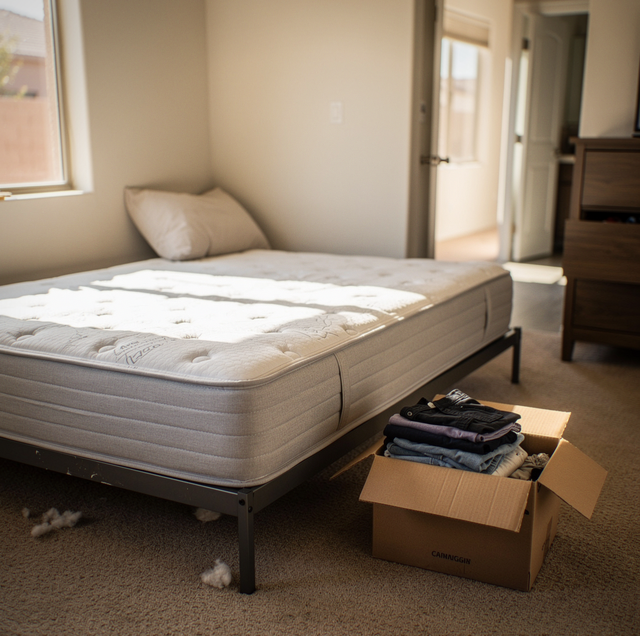
Folded twice and pushed under the leasing office door before the office opened, the note is written in pencil on the back of a grocery receipt. The tenant in 3C found bugs in the bed, has been awake since two, and wants any other unit, the empty one on the first floor or anything else, because they cannot sleep in that bedroom another night. By eight, the manager has a simple request: a vacant unit with its keys in the drawer. Saying yes feels kind. Whether it helps the tenant or the building depends on what moves with them.
Where Bed Bugs Go When a Household Changes Units
Bed bugs spend the hours between meals pressed into narrow gaps close to where people sleep and sit: the seams and piping of a mattress, the joints of a bed frame, the underside of a couch, the corners of a dresser drawer. Those are the same pieces a household carries first when it changes units.
The mattress, the frame, the couch, the nightstand, and the boxes packed from the bedroom closet all go down the hallway or the stairwell and into rooms that have had no reported problem. Clothes and bags carry bugs as well. Every item that crosses is a chance to deliver a few bugs, or a few eggs glued into a seam, to the vacant unit, and nobody standing at the door can see which items are carrying them.
The move does nothing for the unit left behind, either. Bugs tucked into baseboard gaps, the carpet edge, or a piece of furniture that stays in place remain where they are, and the old unit still has its problem. A transfer made before treatment can leave the building with two units to deal with where it had one.
The Reported Unit Comes First
The first step is an inspection of the unit the note came from, and until it happens, nothing in that unit moves. Carrying things out before anyone has looked at them makes it harder to tell whether the bugs are bed bugs at all, and it spreads whatever is there to other parts of the building. That restraint covers the vacant unit too: no boxes staged in it, no mattress parked in it overnight, no armful of clothes carried over to start with.
The inspection answers what the manager needs to know first. Is it bed bugs? Where in the unit are they, and how far has the problem gone? John rates the severity and builds the prep based on what he sees, so the instructions the tenant receives are specific to that unit.
If bed bugs are confirmed, the whole unit is treated as soon as the prep is done: every room, all the furniture and the baseboards, applied by hand. The unit stays empty for 4 hours while the treatment dries, and the tenant can sleep there that night. That last point matters for a note like this one. The tenant who wrote it is asking for another place to sleep, and the treated unit becomes a place to sleep that same day again.
Timing a Transfer Around the Second Visit
Eggs wedged deep in a seam can hatch after the first treatment. The residual, which keeps working for several months and kills every stage, meets the young when they come out to feed, and the second visit about two weeks later is timed to that egg cycle.
That timing is why the order matters for a transfer. Moving the household between the two visits carries belongings out of the treated unit while eggs inside them may still be hatching, and the second visit cannot reach what has already left. A move in that gap works against the first treatment.
So the sensible order runs: inspect, prep, treat the whole unit, keep the second visit, and if the tenant still wants to move after that, move then. That order lets the second visit finish its part in the unit where the problem started before anything is carried into a new one. It makes no claim that the new unit will stay free of bed bugs; it keeps the transfer itself from being the way they get there.
Getting the Tenant Through the Days Between Visits
A tenant who slid a note under a door at dawn is not asking for a lesson in egg cycles. They want to know what to do tonight, and a few plain answers cover it.
Sleep in the bed: Once the treatment has dried, the tenant goes back to their own bed. Moving to the couch to get away from the bites can carry bugs into the living room, the same problem as a unit transfer on a smaller scale.
Leave belongings where they are: Nothing goes to the vacant unit, a storage room, a car, or a relative's home for safekeeping while the job runs. Each of those becomes one more place that needs a look.
Report what they see: A bug spotted between visits is worth passing to the office, with a clear close-up photo if one can be taken, so it reaches John without anyone having to move anything.
Know the return date: The date of the second visit gives the tenant a fixed point to hold on to, and it is also the point at which the transfer request can be picked up again.
Answer the note in writing the same morning. Say the request is heard, that an inspection of the unit comes first, and that the transfer question will be taken up again after the second visit.
The Manager's Call and the Facts Behind It
The decision on the note is the manager's, and the inspection gives it firmer ground to stand on than the tenant's fear or the wish to be helpful. Two findings carry the weight.
Whether it is bed bugs: If the inspection turns up another pest or nothing at all, the request rests on something other than bed bugs, and the transfer question changes with it.
How far it reaches inside the unit: A problem confined to the bed frame and one with signs in the couch, the dresser, and the closet are different jobs, and the second one has more belongings that would carry bugs on a move.
With those findings in hand, "not yet" becomes an answer the manager can explain. The tenant hears that the unit will be treated once the prep is done and that the transfer request stays open until both visits are behind them. If the move still happens at that point, it happens with the treatment complete in the unit the household is leaving.
Saying yes on the first morning gives the tenant a new door to close behind them. It does not give the bugs a reason to stay on the other side of it, because they leave in the same boxes, frames, and cushions the household carries.
The note asked for any other unit, and the reply that best serves the tenant is a sequence: look first, treat the whole unit, keep the second visit, and decide on the transfer after both visits are done. That reply takes the tenant seriously on the morning the note arrives, and it keeps the vacant unit out of the problem while the treatment runs its full course.
Frequently Asked Questions
It can. The vacant unit is not part of the reported unit's job, and it remains outside that job as long as none of the household's belongings are carried into it before both visits are complete.
Then the vacant unit has a question of its own. Leave the bedding, clothes, and bags that went there exactly where they are, do not carry them back through the hall, and have both units looked at. One night there proves nothing either way.
Not for what gets carried. The bugs ride along in whatever is moved, so a unit on another floor or at the far end of the building receives the same mattress seams and drawer corners a unit across the hall would. Picking a different unit changes nothing; the order of the move does.
Take it seriously and keep the reply calm. Lost sleep and worry are real. A strong skin reaction, or distress that keeps getting worse, warrants a visit to a health care provider, and the tenant can be told so plainly.
Leave them in the car for now, and do not carry them into the vacant unit or back into the old one. Say so when you call, so the car is part of the plan from the start.
That unit is a new report. It gets its own inspection and its own findings, and if bed bugs are confirmed there, it is treated as a whole unit with its own two visits, separate from the job on the old one.
Weigh the transfer request against a free inspection of the reported unit — the findings show how far the bugs reach and what has to happen before any belongings cross the hall. Bed Bugs Arizona serves Phoenix and towns across Arizona. Call 623-451-0541.