

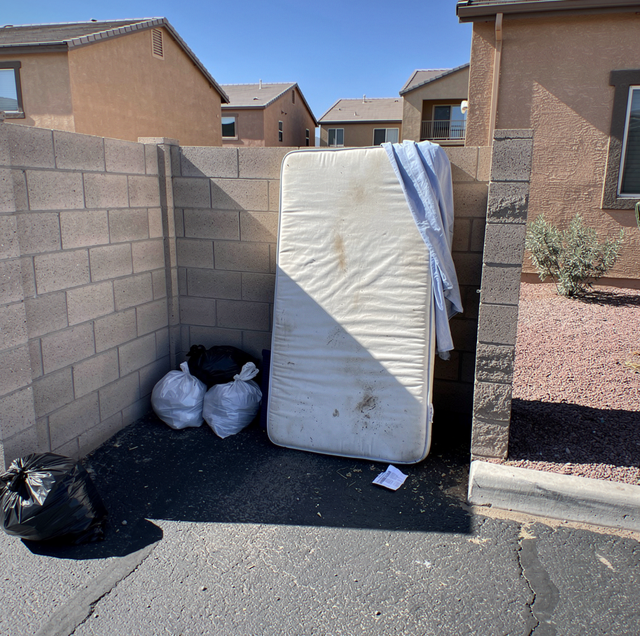
One corner of a fitted sheet is still hooked over the mattress, pale blue elastic pulled tight around the top edge while the rest of the cloth sags into the grit at the foot of the wall. The mattress stands on end against the block wall of the dumpster enclosure, set there sometime overnight. Whoever opens the office at first light sees it before the earliest resident walks past with a trash bag. That sheet says somebody slept on this bed within the last few days, and the bug a resident mentions seeing on the fabric says why it may have left the unit in a hurry. For the manager, the mattress is less a disposal chore than a message about the unit, and the order of the next few moves determines how far the problem spreads from this point.
Why a Discarded Mattress Worries a Manager
Bed bugs hide in seams, piping, and tufted folds within a short walk of the person they feed on, and they come out at night to feed. When a mattress is carried out of a unit, any bugs and eggs inside it travel with it. Nothing about the outdoor trip changes who they are or where they can go next.
A trash area is also a crossroads. Households from all over the property walk to it, and a mattress or couch left there reads to some residents as free furniture. Furniture set outside can pass bed bugs to the neighbors; on a shared property, the trash area puts that one piece in front of every household that takes out the garbage.
That gives the manager three separate worries:
- The piece itself: Someone may carry it home, and the bugs riding in it start over in a new unit.
- The people around it: Residents and staff come and go beside it all day.
- The unit it left: The bugs that were living around that bed did not all leave with the mattress.
The third worry is the least visible, and it is the one the rest of this sequence is built around. Getting the mattress off the property ends the first two. It does nothing for the third.
What the Mattress Tells You About the Unit Behind It
A mattress at the dumpster tells you one thing for certain: somebody wanted that bed out. Everything past that is a guess until a unit has been inspected.
It does not confirm bed bugs. Mattresses go out for plenty of other reasons, from a move to a new bed delivered the day before, and dark marks on old fabric can be dirt, mildew, or a spill. Bites alone cannot identify bed bugs, so a resident's report of bites is a reason to look, not an answer.
Even with a bug seen on it, the mattress does not measure the problem. Bed bugs can rest in cracks, joints and other furniture near where people sleep and sit, so a household that has had them for a while can have them in more than the one piece of bedding. A family that has just lost its bed also sleeps somewhere else that night, on a couch, an air mattress or a child's bed, and sleeping in another room can carry bugs along to it.
The mattress also says nothing reliable about which unit it came from or how long the bugs have been there. Those answers come from the inspection, and the inspection needs a unit to start in.
First Things to Do With the Mattress
Before anything else, keep anyone from carrying it off. A resident who takes it home turns one infested unit into two, and that second unit may never connect its bites to the free mattress from the trash area.
Leave it where it stands rather than moving it back indoors. Hauling it into a maintenance shop, a storage room or an empty unit to keep it out of sight walks it past doors, through breezeways and into a room that was clean an hour earlier. Staff does not need to turn it over, open it up, or take a closer look at it either; a look at a piece already out of the unit does not change the next steps.
Call John the same day. Say what the piece is, where it sits, roughly when it appeared, and which unit, if any, residents have connected to it. Once it is going, it leaves the property right away; it should not stand by the bins for days with the sheet still on it.
Getting the Unit It Came From Looked At
Finding the unit is the step that protects the rest of the property, and it takes no detective work beyond what management already has. Ask residents whether anyone saw it carried down. Check the property's records for a recent move-out or a maintenance request mentioning bites or bugs. Look at which building or walkway it came from. Do not guess aloud, accuse anyone, or enter any unit to look around before John has been there; access and notices are the property's to handle, through the usual channels.
Anyone can bring bed bugs home, from a trip, a visitor, or a used chair, and having them is not a sign of a dirty home. A tenant who dragged a mattress to the dumpster in the middle of the night was trying to solve the problem with the only tool at hand. That tenant is readier to open the door for an inspection when the first conversation is about help rather than rules.
Once the unit is identified, John inspects it and rates the severity of the problem. If treatment follows, the whole unit is treated, every room with its furniture in place, and he returns about two weeks later for the second visit. Management handles access to the unit and passes on the prep John names for it.
Whether John looks at the units next door depends on how severe the reported unit is and what the history of the surrounding units suggests.
The Message Other Residents Need
Residents will ask about the mattress before the day is out, and a short, plain message heads off the worst outcome. The property decides how and when to send notices. Whatever form it takes, two points do the work:
- Leave it alone: The piece by the dumpster is not free furniture and is not to be taken.
- Speak up: Anyone who already took something from the trash area, or who knows where the piece came from, tells the office.
A resident who sees signs at home after that is a separate report, and the office passes it to John the same way.
The fitted sheet will be gone with the mattress by the end of the day, and the trash area will look the way it always does. What decides the outcome is quieter work indoors: a unit identified without blame and an inspection that shows what is there.
Frequently Asked Questions
Leave that question for John rather than spraying or hosing the area down yourself, and say on the call whether anything else was left beside the bins, such as a cushion, a rug, or a bag of bedding. The next step still turns on the unit the piece came from.
Ask the resident to keep it inside their home for now, since carrying it back out means it passes through more doors. Then give John the unit number and the day it went in, so both homes are on the same call.
No. Bulky items are dumped by people who do not live on the property at all, from a truck that pulls in after dark, so a mattress by the bins does not prove it came from any unit. If the search turns up no unit, that is a real outcome too, and the office watches for a report.
It gives John more to work with. Tell him the dates each piece appeared and in what order. A run of discards can mean one household working through its rooms one piece at a time, or more than one household with a problem, and the sequence helps him decide where to start.
The steps stay the same. Say what the piece is when you call, and whether its cushions are still with it, since a loose cushion can be picked up and carried off on its own, apart from the frame.
Yes. The risk comes from contact with the piece itself, such as leaning trash bags against it, sitting on it to rest a load, or pulling off the sheet. Walking up to the dumpster and dropping a bag inside does not put anyone in contact with it.
Flag the mattress by the dumpster on your first call — John inspects the unit it came from first and judges the units around it based on what he finds. Bed Bugs Arizona serves Phoenix and towns across Arizona. Call 623-451-0541.