

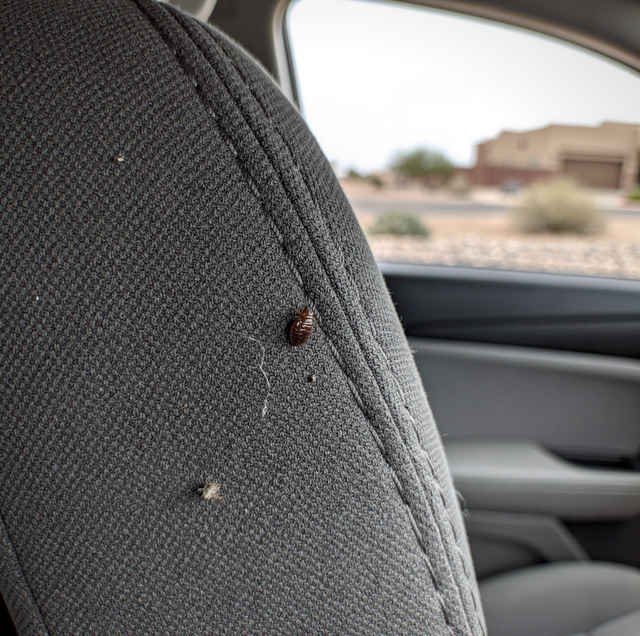
At the end of a late shift, the dome light catches a small, flat bug walking the stitching of the back-seat seam where a passenger's bag sat a minute ago. Nobody else is in the car, and the question that follows is a practical one for anyone who drives people for a living. Does the car need treatment, and has the bug already gone home on a jacket? The answers depend on whether this is a single traveler or a group living in the vehicle, and only an inspection can settle that.
What One Bug in a Car Can Mean
A bed bug is a hitchhiker. It rides on clothing, bags and belongings, so a passenger can bring one aboard without ever knowing. A single bug on a seat can be a lone traveler who climbed off its ride, or the first one you happened to see among several. From the driver's seat, the two look the same.
What separates them is what surrounds the bug. An established problem leaves more than one bug behind: dark spotting along seams, pale shed skins, tiny eggs, bugs of different sizes. A lone bug with none of that around it does not prove an infestation, nor does it rule one out. The decision to inspect and what the inspection finds belong to John Taylor, the owner, who conducts the inspections himself.
Seat seams and floor mats are the places a driver's eye lands first because bed bugs settle into thin gaps near where people sit. A glance is as far as a driver needs to go. Searching the rest of the vehicle is the inspection's job, and a flashlight search by someone who knows where to look turns up what a quick check misses.
Why the Car Gets the Same Process as a Home
Vehicles, buses, and fleets are among what John treats, and a car is not a smaller or lighter version of the job. It follows the same process as a home: the treatment is applied by hand, it leaves a residual that keeps working for several months and kills every stage of the bug, and a second visit follows about two weeks later, timed to the egg cycle. That second visit exists because eggs hatch between visits, and an egg does not care whether it was laid in a bedroom or a back seat.
No quick wipe-down stands in for it, and no version of the job covers only the seat where the bug was seen. A driver who expects a quick fix is better off hearing that now than after a second bug turns up.
How a vehicle job runs in practice (how long it takes, what the car needs before the visit, how long it stays parked afterward) is something John answers on the phone for the specific vehicle. Guessing at those details ahead of the call helps nobody.
Steps to Take Before the Vehicle Is Looked At
The best move is the quiet one: leave the car as it is. Store sprays and bug bombs do not belong anywhere near the seats; every step of the treatment is John's.
Do not haul floor mats, seat covers, cushions, or the bag from the back seat into the house to deal with them there. Carrying a possible problem through the front door is how a car question becomes a home question.
Whether to keep taking riders in the meantime is a judgment call, and it is one to raise with John on the first call rather than settle alone at midnight. A clear close-up photo of the bug can be texted to John's number, and he replies, which gets the conversation started before anyone drives anywhere.
Whether the Bug Can Follow You Home
It can. Bed bugs travel on clothes and belongings, and a driver spends hours with a jacket, a bag, shoes, and a phone against the seats. A bug that landed on a passenger's bag can reach a couch on a driver's sleeve. That is a possibility, not a given, since one bug that crosses the threshold does not always settle in.
Some drivers plan to wait for the weather to turn before doing anything about the house. That plan does not hold up. Bed bugs live indoors alongside people, so a long, hot stretch does not slow them down, and a cold one does not stop them. A bug that crosses the threshold on a jacket meets the same indoor conditions in any month, so the calendar gives no reason to put off the home inspection.
If the worry will not go away, John's inspection of the home is free. He starts in the room of greatest concern, which for a driver may be wherever the work clothes land at the end of a shift. If bed bugs are found there, the whole home is treated, not one room, with a second visit about two weeks later. Everyone, pets included, is out for 4 hours while it dries, and you sleep in your own bed that night.
Details John Needs When You Call
A short, plain description gets the call moving. Have these ready:
- The vehicle: The kind (sedan, van, bus, a fleet vehicle) and who owns it, since a fleet job involves the person who makes decisions for the fleet.
- Where the bug was seen: The seam, the mat, or the seat, and about when.
- What else showed up without a search: More bugs, dark spots or shed skins, or nothing at all.
- Where the passenger sat and what they carried: Only what you noticed, with no need to question anyone.
- Your own home: Whether anyone there has had bites or seen bugs, and whether the car travels home with you or stays at a lot.
John will tell you what he can do for a vehicle and when, and that answer comes from him, not from a guess. Tell him the whole picture, including that it was one bug.
Looking is the part to leave to someone who does it for a living. The seat, the jacket, and the sofa at home each hold the same question, and a proper inspection of the right places answers it faster and more fairly than any amount of worrying in a parked car.
Frequently Asked Questions
No. Bed bugs can be picked up almost anywhere, and picking one up comes down to bad luck. A rider's bag is as ordinary a route as a doctor's office or a restaurant.
Yes. The same process works in any vehicle, so a passenger van or a bus is not a tougher job than a sedan, only a bigger one with more seats to work through.
John plans each day around which customers called and when they will be home, and he phones ahead if the day runs late. Telling him the hours the car sits parked gives him something to work around.
Calls are answered 7 days a week, from 7 AM to 7 PM. Inspections and treatments are done in normal business hours, and a call placed earlier in the day gives John the most room to plan.
John does. He answers every call himself, so the person who hears the first description of the seat and the bug is the one who comes out to look.
No. A photo sent to John's number is used only to identify the problem and plan the inspection; no marketing texts are sent.
Text John a close-up of the bug — he replies, and you learn whether the car and your home need a look. Bed Bugs Arizona serves Phoenix and towns across Arizona. Call 623-451-0541.