

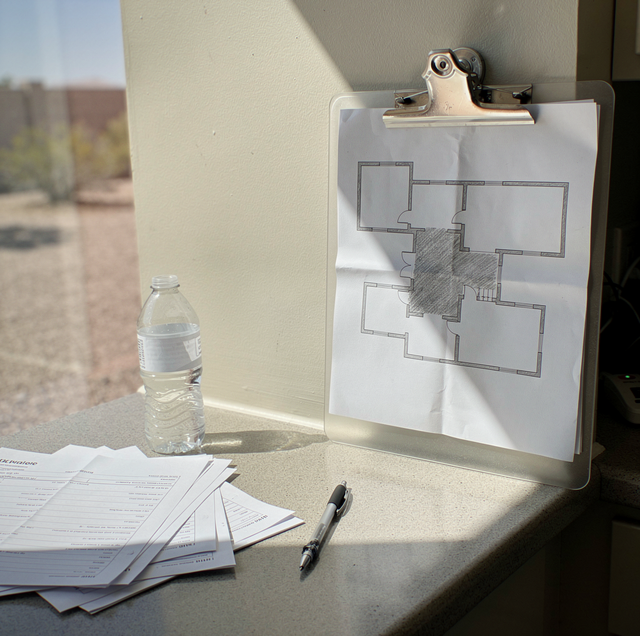
Two pencil outlines frame the shaded square on the floor plan clipped inside the chart at the nurse's station, one on each side, drawn by someone who stopped short of shading them in. The shaded room is where a resident's sheets showed small spots during a bed change this morning. The outlines are the rooms on either side of it, and past them, off the edge of the page, sit the lounge and the dining room where the same residents spend their afternoons. Whoever drew those lines wants one answer before the phone call: should the rooms next to this resident's room also be checked for bed bugs? The answer comes from the inspection, and the decision about each neighboring room is made in the building, after someone has looked.
Why the Question Comes Up After One Room
A care home puts bedroom after bedroom under one roof, with residents, staff, visitors and their belongings moving through the halls all day. Bed bugs travel on people and the things they carry, and once inside a room they can settle near where someone sleeps or sits for long stretches. Set those two facts beside a floor plan, and the neighboring rooms draw the eye at once.
Shared rooms add to the worry. The lounge and the dining room serve residents from every room on the hall, so a sign in one bedroom makes staff wonder about the furniture everyone else uses as well. That is a fair thing to wonder about. On its own, though, one room with a sign is one room with a sign, and it says nothing yet about the rooms around it.
No distance, wall count, or number of rooms fixes in advance which neighbors get a look. That call is made during the inspection by the person doing it, based on what the first room shows and what the staff can tell him. The rooms above and below in a building with more than one floor raise the same question and receive the same kind of answer.
What the Inspection Looks at First
John inspects the rooms staff are worried about, beginning with the one that prompted the call. The search starts at the bed and the furniture where the resident spends long hours, and works outward from there. He is looking for the bugs themselves and the traces they leave: dark spots, which are fecal matter; eggs; and the pale casings shed as young bugs grow. Bites alone cannot determine whether bed bugs are present, and any mark on a resident's skin is for a health care provider to evaluate.
How much of that evidence turns up, and in how many places within the room, tells him how serious the problem is. A room with a few signs gathered at the head of the bed reads differently from one where spotting runs along the frame, the nightstand, and a chair. That reading is what the rest of the visit is built on.
How John Decides Whether a Neighboring Room Needs a Look
This is the part the floor plan cannot answer. Whether John looks into the rooms on either side, the lounge or the dining room, is his call at the inspection, and no checklist makes it for him.
A neighboring room with something reported about it, such as a second resident mentioning bites, spots on another set of sheets, or a bug seen in a common area, is a room staff is worried about, and it comes up on the call for the same reason the first one did. A neighboring room with nothing reported is a question John answers at the visit, and the answer can go either way.
The shared rooms follow the same logic. A lounge used by residents from across the floor, or a dining room the whole hall passes through, may or may not come into it, depending on what the bedrooms show and what staff has seen there. The facility should not expect a fixed sweep of every adjoining room, nor assume the neighbors are clear just because nobody has mentioned them yet. Both would be guesses, and the inspection exists to replace guesses with what is in the rooms.
Notes Staff Can Make Without Touching Anything
What helps before John arrives is short: write down what staff already know, and leave the rooms as they are. Moving a mattress, carrying linens down the hall, or taking a resident's belongings out of the room makes the picture harder to read and can spread whatever is there.
Notes worth gathering for the call:
- Room numbers: Every room where anyone has seen anything, with the shaded room first.
- What was seen: A bug, spots on sheets or marks a resident mentioned, and on which item.
- When and by whom: The shift and the staff member, so John can ask the person who saw it.
- Common areas: Any sign in the lounge, the dining room or another shared space, and where in that space.
Nothing in that list needs a drawer opened, a cushion lifted or a bed stripped.
Who hears about the sighting, whether staff on other shifts, residents or families, is the facility's decision.
Setting the Plan With the Facility
After the search, John tells the facility what he found and how serious it is, and the plan for the job is then set with the building's management. That is where the neighboring rooms are finally sorted out: either the inspection gave a reason to include them, or it did not. The facility knows its residents, its daily routine, and which rooms can stand empty at which times, and that knowledge shapes how the job fits the building.
The treatment is the same hand-applied method used in a house, put on the rooms the plan covers, with a second visit about two weeks later. Which of the outlined rooms fall inside that plan is the answer the chart has been waiting for.
Pencil suits that chart because it erases. The outlines drawn this morning mark where staff is paying attention, and that attention is worth keeping up through the weeks of the job. What fills them in, or rubs them out, is the look John takes and the plan the facility agrees to afterward.
Frequently Asked Questions
No. A shared room is a single room, so both beds are within the room of concern and are part of the same search. Mention on the call that two residents sleep there, so the second bed is looked at with the first.
The facility's staff. The facility is the one arranging the job with John, so a family's question about a neighboring room goes to the people who run the building, who can raise it on the call.
No. The facility arranges prep for each room being treated, and which rooms those are is known only once the plan is set. Stripping beds and bagging clothes in a room that ends up outside the plan adds work for staff and unsettles a resident for no gain.
An inspection is a visual search of the room, so time out of the room belongs to treatment day alone. Whether a resident stays in the chair by the window or steps out while John looks is something staff can work out with the resident, based on what suits them.
It is worth saying. A room that takes in a new guest every so often sees more suitcases and bags arrive than one where a resident has lived for years, and arriving belongings are one way bed bugs reach any building. That turnover says nothing about whether this particular room has them; it is background for John.
Access to any resident's room runs through the facility's staff, who know which approach will sit best with that resident and which familiar face should be there. Tell John on the call that a resident is uneasy, and that the facility and John agree among themselves on how the room is seen, if it needs a look at all.
Include the outlined rooms when you describe what staff have seen — at the free inspection, John can say which of them, if any, need a look. Bed Bugs Arizona serves Phoenix and towns across Arizona. Call 623-451-0541.