

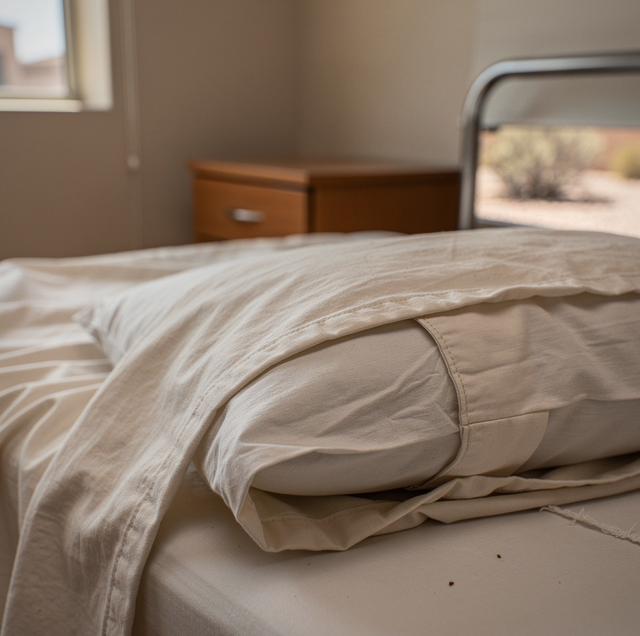
Two cardboard boxes sit on the floor beside the reception desk, each labeled in marker with a room number and the word "Mom," and a rolling suitcase leans against them with its handle still up. Her son signs the last form on the clipboard while a staff member tapes a card to the top box. In an hour those boxes will be in his car, and by evening they will be open in the spare bedroom that has just become his mother's room. Somewhere between the desk and the driveway, a worry surfaces that he has not said out loud: if bed bugs were anywhere in that building, could some of them be riding home in the boxes?
They could, and they could just as easily not be there at all. Bed bugs move from place to place on belongings, and a care home is a building where people sleep, so it can pick them up the same way a house, a hotel, or an apartment can. If the home had bed bugs, or you are not sure, the useful steps are short: know which of your parent's things carry the risk, ask a few plain questions before moving day, keep an eye out in the weeks after, and have the house looked at if anything turns up.
What Can Travel Out of a Care Home With a Resident
Bed bugs do not live on people. Between meals, they tuck themselves into seams, folds, and narrow gaps close to where someone sleeps or sits, and they leave a building behind whatever is carried out of it. For a resident moving home, that means the bedding, the clothes, the bags and any furniture that stood in the room.
Not every box carries the same risk. The pieces that spent months beside your parent's bed or chair sit nearest to where any bugs in that room would have settled. Things that stayed in a cupboard or on the far side of the room spent those months well away from it. If your parent had a favorite chair or a nightstand in the room, those belong on the closer end of the list, along with the pillows, blankets, and the suitcase that lived under or beside the bed.
A bug riding out on belongings puts no blame on the care home or the way it is run.
What the Family Can Learn Before the Move
Staff are the right people to ask, and the questions can stay simple. Has your parent's room had any bed bug work done recently? If it has, is that job finished? Bed bug treatment can run in two visits about two weeks apart, so a room can be partway through its job on the day you come for the boxes.
Ask in a neutral way, as part of planning the move. If staff tell you nothing has been found, that is useful to know, and it still leaves the boxes as belongings that came from a building where people sleep. If they tell you the room was treated, it helps to know where in the schedule the job sits before deciding what moves first.
Nothing here calls for the family to search the room or take furniture apart. The point is to arrive on moving day knowing what the staff knows.
The First Nights in the New Room
Keep your parents' things together in the room that is becoming theirs, at least until everyone has had a few weeks to see how things go. Spreading the boxes through the garage, the living room, and a closet down the hall gives any bug inside them more places to end up. If there is a choice, open the boxes on a hard floor, away from the beds.
Clothes and bedding from the care home can go through the dryer on high heat before they go into your parents' drawers or onto the bed. High heat in a dryer can kill bed bugs, and putting the care-home laundry through it once is a sensible start in a new room.
Furniture is the harder call. A chair or nightstand from the room can take its place after a slow flashlight look along its seams and joints, with nothing taken apart. Setting it on the patio or in the driveway for a while does not tell anyone whether it carries bugs, and furniture set outside can pass them along to a neighbor. Leaving it where it lands and watching the room does more.
Signs Worth Knowing in the Weeks After
Whoever changes your parent's bed in the new room is in the best position to notice small spots of blood on the sheets. The other signs are just as small: dark spots on fabric, tiny eggs, the casings young bugs leave behind as they grow, and the bugs themselves.
Bites alone cannot show that bed bugs are the cause. Skin reacts to plenty of things, and bites look alike from one insect to another. If your parent has a rash or skin reaction that concerns you, a health care provider is the right person to see about it.
Bed bug eggs hatch within about two weeks, and the young that come out are small and hard to see, so a few eggs carried home in a fold of fabric can show up first as spotting on the sheets, not as a bug anyone notices.
When to Have the House Inspected
Call when there is something to call about: a bug, spotting on the sheets, a mark on a chair that does not wipe away, or a worry that will not settle. The in-home inspection is free and can be booked if you are concerned, without needing proof first. If you can get a clear close-up photo of what you found, it can be texted ahead.
Until the inspection, leave things where they are. Do not carry the chair back out, do not throw away your parents' furniture, and do not move the bedding to another room. Moving and discarding things spreads bugs and makes them harder to find, and furniture thrown out in a hurry is furniture that could have been treated and kept.
If the inspection finds bed bugs, the treatment covers the whole house, not just your parent's room. It is applied by hand to every room, the furniture, and the baseboards, and it leaves a residual that keeps working for several months and kills every stage of the bug. A second visit follows about two weeks later, timed to the egg cycle. Everyone, pets included, stays out for 4 hours while it dries, and the family sleeps in their own beds that night. A one-year warranty comes with the treatment.
Bringing a parent home is about the room and the routine that make them feel settled, and the boxes are part of that. Knowing which of their things to keep an eye on, and asking the facility a plain question or two, lets the house go back to being a home for everyone in it.
Frequently Asked Questions
Not necessarily, and no news after the move is not an all-clear. If you have any reason to wonder, the free inspection at your house answers the question directly, at any point after the move.
It is a reasonable courtesy, kept free of blame. A short, factual call with the date your parent moved out and what was found at the house gives the people who run it something concrete to act on, and the next step there is theirs.
Mention it at the inspection so the prep covers it. A pill organizer kept on the nightstand counts, and any dose due during the 4 hours away should be left at home with your parent, so nobody has to go back into a room that is drying.
It is an empty, pale-yellow casing left behind by a young bed bug as it molts on its way to adulthood. Being hollow, it can look see-through against the sheet and is easy to mistake for lint or a crumb, so leave it where it lies for the inspection.
Each return trip is another chance for a bug to ride home in a bag or a coat, just as it could during the move. The signs to watch for and the free inspection stay the same, regardless of how many trips there are.
No. They are the same insect with the same habits and the same signs, whether they ride in from a care home, a hotel or a visitor's bag, and where they came from changes nothing about how the house is inspected.
Make a free inspection the next step — if a sign turns up after your parent settles in, John can check their room and the rest of the house and tell you plainly what he finds. Bed Bugs Arizona serves Phoenix and towns across Arizona. Call 623-451-0541.