

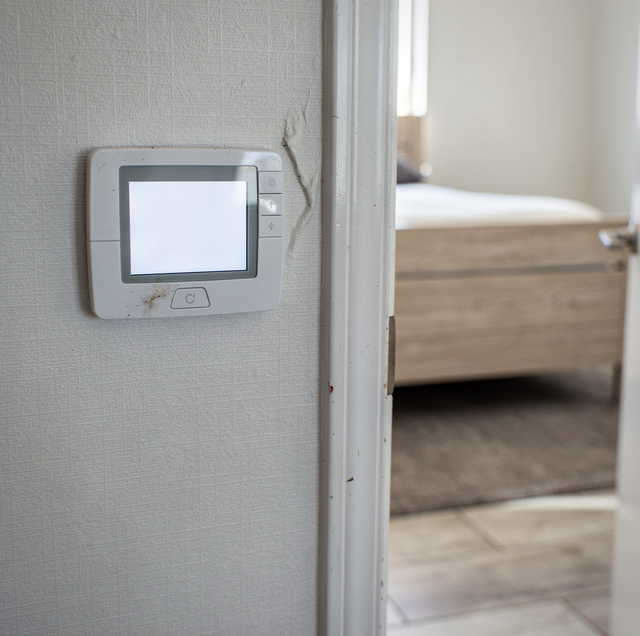
The thermostat on the hallway wall is set a few degrees lower than usual, and a sweater hangs over the bedroom chair beside it. The household has agreed to put up with the chill for a while, because a search result suggested that a cold bedroom makes a poor home for bed bugs. The idea is worth taking seriously, since it costs nothing and sounds sensible. Air conditioning does change a room, though, and bed bugs live in more than the room: they live alongside the people who sleep there, and a lower setting leaves those people exactly where they were.
The Appeal of a Cold Bedroom
Bed bugs are insects, and an insect's body temperature follows its surroundings. The pace of its life follows its body temperature. That much is true, and it is why the cold-room idea feels like it has a mechanism behind it: change the temperature, change the insect.
It also asks very little. There is nothing to buy and nothing to move; it can start tonight, and ending it feels like giving up, so a plan this easy can keep running long after it has had a fair trial.
The leap comes next. A change in pace is not an address change. A cooler room gives a bed bug no new reason to leave the mattress seam or the frame joint it is resting in, and it takes nothing away from the household that keeps coming back to that bed.
There is also a reason the idea survives a trial run. Bed bugs spend their resting hours packed into gaps near the bed, so a few quiet nights prove little. A household that lowers the thermostat and sees nothing for a week can easily credit the thermostat, when the bugs were simply out of sight.
What a Cooler Bedroom Does and Does Not Change
What can shift: The speed of some life stages. Eggs can hatch sooner in a warm room and later in a cool one, and the second visit still comes about two weeks after the first, timed to the egg cycle. A shift in speed moves a schedule around. It does not empty a bed.
What stays put: The sleeper, the seams and the eggs. Bed bugs are active year-round, in homes run cool and homes run warm alike. A room with a person in it still has someone to feed on, and the bugs resting in the mattress piping, the box spring fabric, or the headboard joints have not been displaced by a change of a few degrees. Eggs glued into those gaps stay glued until they hatch, no matter what the room feels like.
What the setting cannot reach: The rest of the home. Cooling one bedroom leaves the couch, the recliner, and the next room at their usual settings, and bed bugs travel with the people who live in the home. Someone who carries a laundry basket from the bedroom to the living room, or dozes on the couch, can move the problem along without knowing it.
A Lived-In Home Still Has Someone to Feed On
Bed bugs depend on people being present, and a household's routine is steadier than any thermostat setting. Beds are slept in every night, and chairs and couches are sat in every evening. A lower setting changes the air in the room. It leaves the household's routine, and the gaps in the furniture they use, as they were. Every hour someone spends in that bed or on that couch is time a bed bug can feed, and no setting on the wall shortens those hours.
That is also how a cold-room approach can stretch a short problem into a long one. While the experiment runs, the weeks go by and the eggs already in place hatch on their own schedule. The household that waited for the cold to work has spent the time in which an inspection could have shown how far things had gone, and a wider spread can mean more prep before treatment day.
Living in a cold house is also a real sacrifice, and a sacrifice that a bed bug problem does not respond to is hard to justify.
Where the Treatment Does Its Work
Treatment has to reach the places bed bugs rest, and a thermostat cannot do that. The whole home is treated by hand, every room, all the furniture and the baseboards, with everyone, pets included, out for 4 hours while it dries.
The part that matters for this question is the residual: it keeps working on the treated surfaces for several months and kills bed bugs at every stage, so a bug tucked into a seam meets it when it comes out. A thermostat has no version of that: nothing it does stays on the furniture and keeps acting on the bugs after the setting changes.
What to Keep Doing Until the Inspection
Carry on as the household normally would. Leave the furniture where it stands, throw nothing out, and skip the bug bombs and store sprays. Moving a mattress or hauling a couch to the curb can scatter bugs into rooms that had none, and a mattress that could have been treated and kept ends up at the curb.
The free inspection is where the question gets settled. It shows whether bed bugs are in the home at all and how far they have spread, and it is the point at which a plan is made for the whole home. It answers the question the thermostat was being asked to answer.
Comfort settings belong to the household, and bed bugs take no direction from them. What closes the matter is the treatment itself: the whole home, the residual and the second visit, all of it laid out at the inspection.
Frequently Asked Questions
Not in what it takes. A bedroom that stays cool because it sits below ground still has a bed and someone sleeping in it, so it's part of the same whole-home job as every room upstairs.
Very little. A thermostat reads the air in the spot where it hangs, so a bedroom at the far end of the hallway can run a few degrees off the number on the wall, and that number was never a reading of the bed.
Not while someone is sleeping on it. A person lying in bed for hours warms the fabric and the layers under it, so the seams nearest a sleeper sit warmer through the night than the air the thermostat measures.
Yes. Egg-laying continues in the settings people choose for a bedroom, including cool ones, so new eggs keep joining the ones already in the bed for as long as the experiment runs.
No. Neither visit calls for one, and the thermostat is not part of the prep for treatment day, so the setting can stay wherever the household leaves it.
There is no need. The treated surfaces continue working in whatever setting the household normally lives in, so the bedroom can go back to being comfortable for whoever sleeps in it.
Skip the cold-room experiment and ask John for a free inspection — the visit shows whether bed bugs are in the home and what a whole-home treatment would cover, so you stop guessing at the thermostat. Bed Bugs Arizona serves Phoenix and towns across Arizona. Call 623-451-0541.