

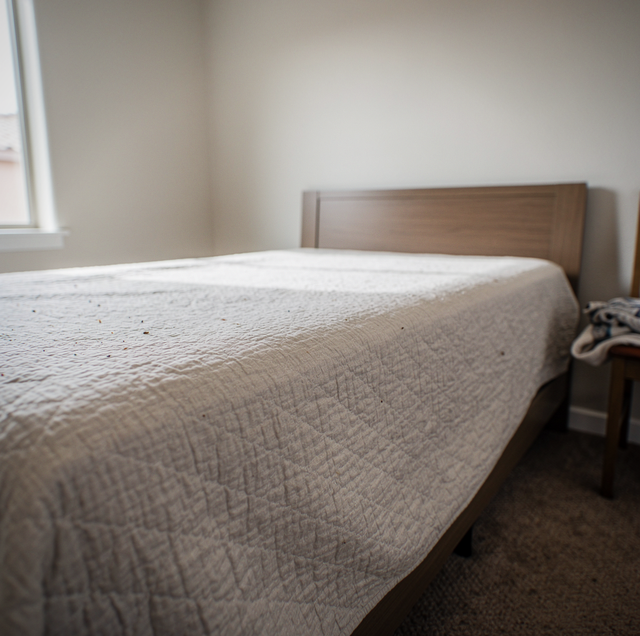
The quilt on the spare bed has not been turned down in months, and the door stands half shut on a room where nothing has moved. When bed bugs turn up somewhere else in the home, that quiet room starts to look like either the safest place in the house or a place nobody has thought to check. Neither guess holds up on its own, because what happens in an idle room depends on the people who live in the rest of the home and on what they carry from room to room.
Why Bed Bugs Gather Around Sleepers
Bed bugs feed on people, so they live in the gaps close to where people sleep and sit: mattress seams and tags, bed frames, the backs of headboards, the folds of couches and recliners. The hiding place and the meal stay within reach of each other, which is why the beds and seats a household uses every day are where a problem can first show itself.
Bed bugs also spread through a home with the people in it. They travel on clothes and belongings, so a robe, a pillow, or a basket of laundry can carry a bug from one room to the next. Both facts matter for a room nobody uses. The first explains where bugs gather. The second explains why that room is still on the same routes as every other room in the house.
What an Unused Room Offers and Lacks
A spare bedroom holds much of what bed bugs use. There is a mattress and a box spring, a jointed frame, a headboard, perhaps an upholstered chair, and baseboards along every wall. The furniture does not change because the room is idle. What the room lacks is the household's daily traffic, and that absence cuts both ways.
On one side, a room that nobody enters gives bugs fewer chances to be picked up and carried somewhere new. On the other hand, it gives a bug that did arrive fewer disturbances, and fewer people whose habits would reveal it. A made bed with an undisturbed quilt can hide a few dark specks along a seam for a long time because nobody is stripping the bed or looking at the edge of the mattress.
Whether bugs that reach an idle room stay in it or move on toward the people in the rest of the home cannot be read from a closed door or a tidy bed, and a single bug found there does not say which way it was headed. Only an inspection can look at the seams and the frame and settle it.
How a Spare Room Can Still Pick Up Bed Bugs
Nobody lives in the room, but people and their belongings still enter it. Three routes are possible, and each one is a possibility, not a finding.
An overnight visitor: A guest who sleeps in the spare bed brings a bag and a coat, and spends hours in that room. If bed bugs came in with the visitor, the spare bed is where they would start.
A napping child: A child who drops into the spare bed for an afternoon nap has put a person in an unused bed, with whatever came along on their clothes.
Someone who left the main bedroom: A person who moved to the spare room to get away from bites may take a pillow and a blanket along. Moving to another room can bring the bugs along, so the bed meant as a refuge can become a second infested room.
In each case, the room did nothing to attract bugs. People and their things brought them, and the same people can carry them back out.
The Spare Room on Treatment Day
The treatment covers the whole home, every room with its furniture and baseboards, so the spare room is in it whether or not a bug was ever seen there.
That settles the spare room without anyone having to guess. Its bed is stripped like the others. Nobody has to decide in advance whether the idle room is clear, because the answer does not change the plan. A closed door settles nothing about what is inside the room or about what gets carried into it later.
Leaving the Spare Room as It Is Until the Inspection
Until John has looked, keep the spare room as it is. Do not drag the mattress into another room, move the bedding to the couch, or carry boxes out of the closet. Leave the quilt on the bed and wait for the inspection, which is free and is where the plan for the home gets made.
Do not spray the room, and do not throw out the bed in the meantime. Whether the bed stays or goes is decided at the inspection. What helps is a plain account of the household: which rooms are used every day, which sit idle, and whether a visitor, a napping child, or a person who left the main bedroom has used the spare room lately.
In the meantime, a quiet bed on the far side of a half-shut door is simply part of the home the inspection covers.
Frequently Asked Questions
Say what is stored there. A room holding things carried in from the bedrooms, such as bedding, a spare mattress or clothes boxed up in a hurry, is a different case from one holding tools, paint cans or picture frames that have not moved in years, and John settles which it is at the inspection. Leave the stored items where they stand.
Raise it on the call before anything is carried in. Furniture and boxes arriving from another home add belongings the inspection has not seen, and clearing the room's current contents out to make space moves them along the household's routes. Settle the order with John so the room is looked at as it stands.
It makes the room less idle than it looks. A few hours of someone in there, with a jacket or a bag set down nearby, puts the room on the household's routes in the same way a short visit does, so mention it on the call.
Yes. Say which room, roughly when, and whether the visitor slept on the room's own bedding or brought their own, then leave the details to him. John decides at the inspection where a closer look is needed.
It can. A bed used as a landing spot for bags, laundry, and coats sits in contact with belongings from across the home, which aligns with the route bugs take. Tell John about the habit so he knows the bed gets handled more than its idle look suggests.
They do. Boxes, bags, or a suitcase pushed under a bed sit right against the frame, and a suitcase that has been on trips is a belonging that travels. Leave them where they are and mention what is under there.
Count every room, used or idle, when you set up a free in-home inspection — an idle room goes into the plan alongside the busy ones, and the treatment reaches it either way. Bed Bugs Arizona serves Phoenix and towns across Arizona. Call 623-451-0541.