

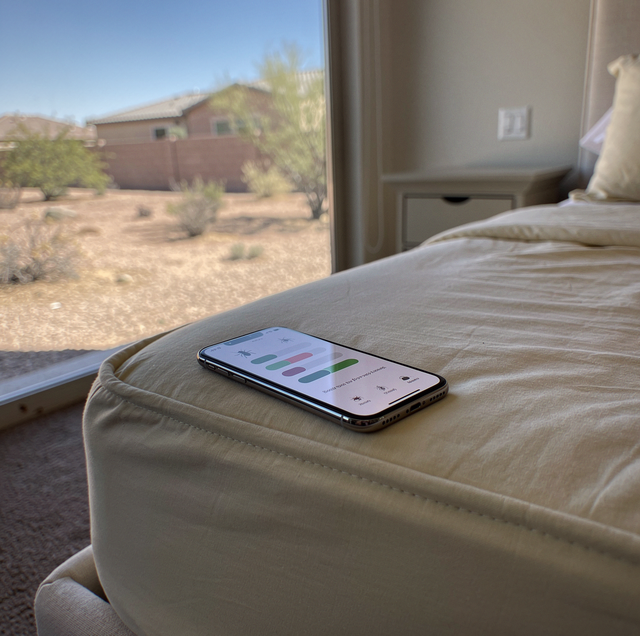
Three bars sit side by side on the result screen, each beside the name of a possible insect, and the longest one reads like an answer. It is the app's ranking of three guesses about one picture. The phone has not seen the mattress seam, the bedroom, the sheets, or any other bug, and the bars say nothing about them. A long bar can be a useful nudge to look closer. It cannot say whether bed bugs live in a home, and neither can a result that names nothing at all.
What an Identification App Does With a Photo
Software receives the photo as a grid of colored pixels. It looks for outline, proportions, color, surface texture, and the arrangement of body parts, then compares those patterns with the labeled example images the app was built from. The output is a ranked list: the labels whose examples the picture resembles, each with a score.
Two features of that process matter to a reader. First, the score describes resemblance between this picture and the examples for a label. It says nothing about how likely bed bugs are to be in the home, because the app holds no information about the home. Second, the app can only choose among the labels it has. A picture of something outside its labels can still get the closest ones, and a subject that is a mark and not an insect at all can come back with a confident-looking list.
Everything a person uses beyond the pixels is missing: where the thing was found, what sat around it, whether anything similar was in the next seam, and whether it moved when the light hit it.
Where a Phone Verdict Falls Short on a Bug This Small
A bed bug occupies a small part of a phone frame, so few pixels capture its outline and fine details. Resolution is the first limit. Angle is the second. A flat, oval body shot from straight above and the same body shot from the side present two different outlines, and the apparent color shifts with the light. An app comparing outlines and colors can return different lists for two shots of the same bug, with nothing to say which shot misled it.
Size is the third limit. A bug and a mark can fill the same stretch of screen, and the image carries no measure of how large either one was. In the room, size is one of the plainest clues a person has. Without it, the app weighs shape and color alone.
Position is the fourth. One find on a seam, and one on a pillowcase look identical once cropped into a frame. Where a find sits and what else turns up near it are part of what separates a bed bug from other small things and marks, and the cropped frame discards all of it.
The Cost of a Wrong Answer in Either Direction
A false "bed bug": The reader who sees that label beside a long bar may strip the bed, bag clothes, carry things out of the room, or buy a store spray. None of that is called for before an inspection, and moving things can make a real problem harder to deal with, because bugs get carried into rooms that had none. If the mark was never an insect, the cost is a bad night and a pile of belongings handled for nothing.
A false "not an insect": The reader who sees a short bar or a result that names no insect may put the phone away and stop looking. If bed bugs are present, they keep feeding, and the problem goes on while the screen says to relax. Bites and spotting that show up afterward get explained away because the app already ruled out the bug.
A right answer that leaves the real questions open: Suppose the label is correct. One bed bug in one frame says nothing about whether a population exists, how large it is, or which rooms it has reached. Suppose a "not an insect" result is correct. It clears that object and nothing else in the home.
Where the App Result Still Helps
The result has three real uses. It is a prompt to look: a bed bug label, or a spread of uncertain labels, is a reason to take the question seriously today instead of waiting. It is a prompt to hold still: whatever the screen says, beds and furniture stay where they are until someone has looked, and nothing gets taken apart or carried out. And it produces a picture, which is worth more than the verdict: the image itself is something John may ask to see, with no app label attached.
What Settles It
The free inspection does what a single frame cannot. John does it himself at home, looking at what the app never saw: where each find sits, what lies around it, and whether the same thing turns up elsewhere in the bed or in the next room. That turns one picture into a search for the places people sleep and sit, which is where the three open questions get answered: are they bed bugs, how far have they spread, and which rooms are involved.
If it is bed bugs, what he finds sets the plan for the whole-home treatment, with a second visit about two weeks later.
Software reads pictures, and a home is more than one picture. Let the app point at something worth checking, then let the room settle it.
Frequently Asked Questions
On some apps the scores are shared out among the few candidates on screen, so the list fills out no matter how weak the match is. The leader then reflects the best of a poor field. When all three candidates look wrong to you, that can be the app telling you it has no good label for the picture.
No. Both read the same single image, so they share the same blind spots: the missing size, the missing position, the missing surroundings. Agreement means two programs found the same shapes resembling a label. Neither looked at the room.
A live mode keeps scoring new frames as the camera feeds them in. A hand-held phone shifts the outline and the light from frame to frame, so the label can flicker between choices as you move. The flicker comes from the changing input, not from the bug. Freezing the frame gives one a fixed input, which brings back all the limits of a single image.
A good record on other pictures does not carry over. Each result is a fresh comparison of one new frame, and an app can have many labeled examples behind some names and far fewer behind others, so a strong run on wasps or beetles says little about the label it is reaching for now.
It says the picture did not resemble any label the app has in its database closely enough to list. The reasons lie on the app's side as much as on the bug's side: the label may not exist in the app, or the frame may be too coarse to compare. That is a statement about the match, and it is silent about the home.
Identification apps are built to name whole insects. Spotting, eggs, and shed casings are marks and remnants, so an app has little reliable to say about them, and a result in either direction deserves no weight. Those signs are part of what John looks for in person.
Swap an app's guess for a free in-home inspection — John looks at the bug and the room together, and tells you if it is not bed bugs. Bed Bugs Arizona serves Phoenix and towns across Arizona. Call 623-451-0541.