

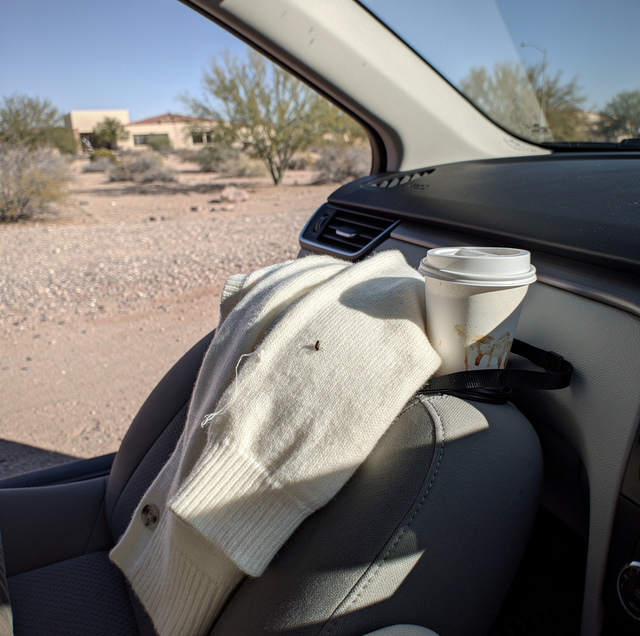
The lanyard and a folded cardigan sit on the passenger seat at 7:15, and at the red light, the driver's eye catches sight of a small dark mark on the sleeve. It could be lint, a seed, a fleck of dried mud, or a bed bug, and a sleeve is a poor place to tell which it is. The second look carries a practical worry: if bed bugs are in the house, did one just leave with a person, and where is it headed? Bed bugs can ride on worn clothes. Whether one did this morning, and what it changes, depends on where the clothes were before they were put on.
How Bed Bugs Treat Worn Clothes
Bed bugs do not live on a person. They live in hiding places close to where people sleep and sit, come out to feed, and return to cover. Fabric picks up a rider when it rests against one of those places: a cardigan draped over a chair arm, a shirt dropped on the bed, a bag set on a couch cushion. A bed bug crawls, and a folded sleeve, a cuff, or the inside of a pocket gives it a gap to settle in for the ride.
That is how bed bugs move out of a home. They get onto the clothes and belongings of the people who live there and travel with them to wherever those people go next, including a workplace. The route is real, and it says nothing about any single morning. What a garment carries depends on what it touched before it was worn. A bug on a sleeve shows where the clothes have been. It does not show how long bed bugs have been in a home, or whether any are.
Where Bed Bugs Rest in a Home
Bed bugs rest in narrow gaps close to where people sleep and sit: the seams and piping of the mattress, the box spring, the frame and headboard, and the seams and cushions of a couch.
That list explains how a garment becomes a ride. Clothes laid across the bed, hung on a headboard post, or tossed onto the couch touch a hiding place, and the bug has fabric to climb onto. A garment that never rested against one of those spots, or against clothes that did, has no hiding place from which to pick up a bug. Which spots in a particular home hold bugs cannot be seen from the doorway, because the gaps are narrow and the bugs stay out of sight during the day.
The Morning Routine Before Anyone Has Looked
No step in the morning reaches the bugs in the home. They sit in their hiding places while everyone is at work, and only a treatment that covers the entire home reaches them. What a morning can do is avoid making the problem bigger before anyone has looked.
Leave things where they are
Moving clothes, bags, and bedding into another room before the inspection can carry bed bugs along, which is how a problem in one room becomes a problem in two. The closet, the dresser, and the pile on the chair stay as they are until John has been through the home.
Wait for the prep list
Clothes that turn out to be infested are washed and dried on high heat as part of the prep John lays out after the inspection, and that list is sized to what he finds. Until then, guessing at which pieces are involved gains nothing. Ask him what to wear to work in the meantime when you call.
What a Co-Worker Sighting Means
A co-worker finds a bed bug on a chair, or on a jacket hung behind a door. That bug arrived on a person. Whether any have settled in the building is something one sighting cannot show either way.
A sighting also cannot name the home it came from. Bugs reach clothes from a couch at a friend's house, a hotel room, a waiting-room seat or a person's own bedroom, and nothing on the insect says which. The only home anyone can check is their own. If a bug at the next desk has you wondering about yours, that is a reason to have the home looked at.
What the Home Inspection Settles
John Taylor does the inspection himself. It is free, takes 15 to 30 minutes, and answers the question a sleeve cannot: Are there bed bugs in this home?
If there are, the answer is a whole-home treatment. It is applied by hand, leaves a residual that continues to work for several months and kills every stage, and is followed by a second visit about two weeks later, timed to the egg cycle. Everyone, pets included, stays out for 4 hours while it dries, and the household sleeps in its own bed that night. A one-year warranty comes with the work.
A search that finds nothing is an answer too. It takes the home out of the question for now, and the mark on the sleeve gets looked at for what it is.
A bed bug on a sleeve is news about where one bug has been. Only the home can say where bed bugs live, and a free inspection reads that without anyone rearranging a closet first.
Frequently Asked Questions
It can narrow the route, though not close it. A uniform that is put on and taken off at work never lies on a bed or couch at home, so it never touches the spots at home where bugs rest. The clothes worn to and from work still do, and they can share the locker with it, so the home inspection is what says whether those spots hold anything.
They can, in clothing that stays put near where they rest. Eggs are fixed in place once laid, tucked into seams and folds, so a pile of clothes left on a bedroom chair or the floor for days can hold them. A freshly laundered garment put on that morning has not sat anywhere long enough to collect any.
Yes. A bug that climbed onto a garment in the morning can still be in a fold or cuff when the garment comes off at night, and the garment then lands wherever clothes land at the end of a day: the bed, a chair, a hamper. That round trip is why a sighting at work and bed bugs at home can both be true at once, and why the home is the place to inspect.
It can. In a heavy infestation, bed bugs turn up in drawer joints and other spots well away from the bed, so a dresser is worth a look. A closet across the room from the bed may hold nothing. Neither can be judged from the doorway, and the inspection covers the dresser, the closet, and the furniture around them.
Leave it where it is. Carrying a jacket through the house to a trash can drops bugs along the route, and the jacket may be washable and wearable afterward. The inspection comes first, and the prep list that follows covers the jacket along with everything else in the home.
Less easily than on cloth. A bed bug grips poorly on smooth, hard plastic, so the badge card makes a poor perch and the garment it clips to matters more. The strap is a different matter: woven webbing, a stitched seam, or a padded clip cover gives it a hold and a fold to tuck into.
Find out whether the home has bed bugs — John's free in-home inspection answers that question before anything in the closet is moved. Bed Bugs Arizona serves Phoenix and towns across Arizona. Call 623-451-0541.