

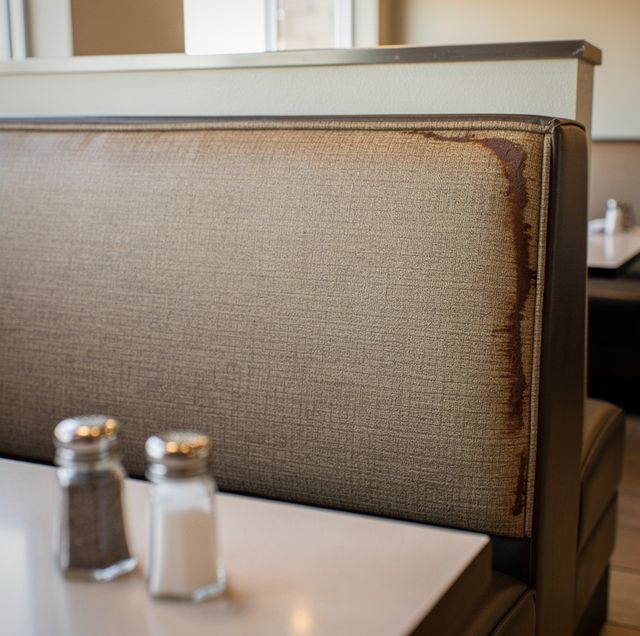
Along the bench's piping back in booth twelve runs a rust-colored smear, and the server wiping down the table after the lunch rush stops, the cloth in her hand. Dark marks like that can be spotting, the droppings bed bugs leave where they rest. Yes, bed bugs can live in a restaurant booth, and the way a booth is built shows where they would go. One find is a sighting, though, and only an inspection turns a sighting into a diagnosis. What the owner does in the next hour decides how cleanly the rest unfolds.
How a Booth Is Built and Where That Leaves Room
A booth is fixed furniture. The seat is a padded platform over a wood or metal base, the back is a second padded panel, and the two meet at a joint where the covering is tucked or pulled tight. Bed bugs rest in narrow, dark, undisturbed gaps with a rough surface to grip, and a booth has several of them that a loose chair does not:
- The seat-to-back gap: The line where the cushion meets the backrest, tight against a diner's lower back for the length of a meal.
- The wall side: A bench mounted against a wall or partition leaves a thin channel behind the frame that a wipe-down does not reach.
- The underside of the seat: The base and its frame, out of the light.
- The cover edges: The borders where fabric ends, and frame begins.
Each of these gaps is tucked away from foot traffic and cleaning. A bug that drops off a bag or a coat into the nearest one can sit there undisturbed for days.
One Sighting Versus a Settled Problem
Bed bugs build up beside beds, because a sleeping person is a meal that comes back to the same spot every night. A diner sits for a meal, awake and moving, and leaves. A booth is mostly a drop-off point: a bug arrives on a diner's bag or coat and can leave the same way. One bug on a bench back, or one smear at a seam, can be exactly that: a hitchhiker that dropped off on its way somewhere else.
The picture changes when finds repeat. A second bug in the same booth a few days later, marks in several places along one bench, or a find in a booth nowhere near the first are signs that bugs may have settled in. Only an inspection shows what a mark is and whether there is a pattern, and John does the inspection himself.
What Happens to Booth Twelve in the First Hour
The instinct is to fix the booth on the spot: strip the cushion, pull the bench out, scrub the seam. The better move is to do less, and to decide what happens to the seating around it.
Leave the booth where it stands: No cushion pulled, no bench unbolted or dragged from the wall. Each of those disturbs the resting spots before anyone has looked.
Keep the smear as it is: The mark and the seam around it are what the inspection has to read.
Tell the host stand: Booth twelve is removed from the seating chart for the rest of the day, so nobody sits there regularly during the next rush.
Call that morning: The earlier the call, the better the chance of a look the same day.
Keep staff calm: The theory that a guest or coworker brought a bug in makes people hide sightings, and hidden sightings are the ones that grow.
Until John has looked, hold the booths on either side of booth twelve as well, and keep coats and bags off those benches. A coat left there through a long meal can carry a bug out the door.
Where a Find in One Booth Points
A booth seldom stands alone. Many are built in runs, and the way a run is joined shows which other seats one find raises questions about.
- Back-to-back booths: Two benches can share one center back panel, so a seam on one side sits on the other face of the same panel, facing a different table.
- A continuous banquette: A long bench along a wall, split into seats only by the tables in front of it, has one wall channel and one seat-to-back line from end to end. A find at one table is a find on that whole bench.
- Booth end panels and coat hooks: The spot where coats hang during a meal is a place a bug riding on a coat can step off.
- The waiting bench by the door: Padded seating where guests sit with their bags before a table opens is built the same way as the booths.
That map is worth having before the inspection: which booths are joined, which stand free, and where coats and bags end up. In a dining room, the areas at risk are the booths and other padded seating, as well as the spots where guests leave bags and coats for extended periods. John agrees with management on which of those are treated, on what day, and what each needs beforehand.
Pro-Treat Plus is applied by hand to the furniture and baseboards in the areas named in the plan. Its residual keeps working for several months, killing every stage. A second visit comes two weeks later, after the eggs that were missed the first time have hatched. A one-year warranty is included, and management is told before work starts if a job cannot be warrantied.
Taking Booths Out of Service for 4 Hours
A treated booth seats nobody until the treatment has dried, which takes 4 hours, so the timing is set around service.
That turns the plan into a seating decision for the owner. When the plan names a run of joined booths, the whole run comes off the floor plan together, and in some rooms that is an entire section. A free-standing booth or a few padded chairs leave the rest of the room's seating as usual. Knowing which booths share a panel or a wall channel before treatment day makes it easier to decide which tables to hold back and which to keep open.
Staff and guests stay out of the treated areas for the full 4 hours, and bags and coats stay out with them. When the 4 hours are over, the booths go back into service, and the second visit two weeks later is timed the same way.
A booth offers a bed bug a hidden crack beside a seated person, and a dining room does not offer a person who stays the night. That gap is why one sighting calls for an inspection and a calm plan, and not for alarm.
Frequently Asked Questions
A smooth cover makes a bug on the surface easier to spot, and that is all it changes. The seat-to-back gap, the cover edges, and the frame underneath are the same, whatever the top is made of, so a clean-looking surface says little about the top.
It adds a hiding spot. A split in the vinyl or a seam worn open exposes the padding behind the cover, which is dark and left alone, so a bug can rest inside the cushion itself and not only along its edges. Point out every tear at the inspection.
No. New covers go over the same frame, the same joints, and the same channel against the wall, and stripping the old cover can shake bugs loose into the room. Wait for the inspection before booking any upholstery work.
It can. Sauce, coffee, and ink all leave dark marks on vinyl and fabric. Bed bug spotting gathers in rows along seams and edges, the places bugs rest, while a spill lands wherever it falls, so the pattern says more than the color.
Yes. A padded chair has its own seam where the seat cover is pulled under the frame. It has fewer of those gaps than a booth and can be turned over, which makes it quicker to check.
A molded plastic booster has few places to hide. A padded high chair with a fabric cover has the same seams as any padded seat, so it belongs on the list of seating items noted during the inspection.
Plan a free inspection of the booth where you found the bug — a quick look settles whether it was a passing hitchhiker or a sign of something settled in. Bed Bugs Arizona serves Phoenix and towns across Arizona. Call 623-451-0541.