

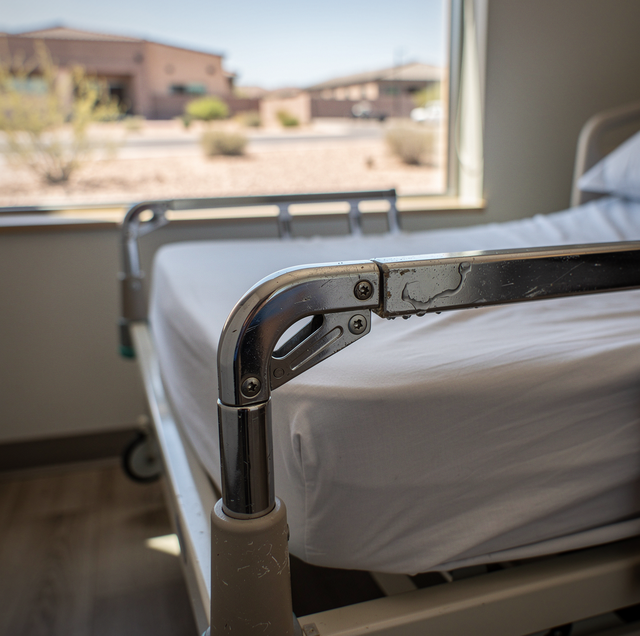
The hinge on the left side rail only comes into view when the rail folds down for the morning sheet change. That is when a caregiver's thumbnail, running along the cold metal, stops at a dark dot pressed into the joint where the rail pivots. It might be dried lotion, a fleck of rust, or bed bug droppings. Can bed bugs live in a hospital bed, with its painted steel, its wipeable mattress and its motor tucked underneath? They can. A care bed holds one person in the same spot for long hours, and its moving parts leave narrow spaces that its smooth surfaces hide.
What a Hospital Bed Is Built From
Bed bugs feed on human blood and spend the hours between meals packed into tight spaces close to where a person sleeps or sits. They find a host by the carbon dioxide and warmth a body gives off, feed, and crawl back to the nearest protected spot. A bed someone rests in day and night gives them a host who rarely leaves.
The bed itself is a set of parts that move against each other. An adjustable care bed has a steel frame supporting a deck split into sections, so the head and, on some beds, the knees, can rise separately. Side rails swing or slide on pivots and latches. On a powered bed, a motor housing sits under the deck and drives the sections, and a hand control on a coiled cord clips to a rail. Casters carry the whole thing. On top lies a mattress in a fluid-resistant cover that wipes clean. On a care bed, the places worth attention are where two parts meet, fold or overlap.
The Mattress Cover, the Frame and the Moving Parts
The mattress cover: A wipeable cover keeps fluids out of the mattress, but its stitched seams, piping around the edges, and sewn-in label are still fabric folds. Bed bugs, their eggs, and their dark spots turn up along those lines on a care mattress the same way they do on any other mattress.
The deck and its hinge lines: Each place where two deck sections meet is a hinge, and the gap at that hinge opens and closes as the head or knees go up and down. The underside of the deck faces the floor, stays dark, and goes unseen by the people who use the bed every day.
The side rails: A rail has a pivot at each end, a latch with a release, and on some beds a channel it slides along. Each of those is a fitted metal joint with a little play, which is where the dot on the opening hinge was sitting.
The motor housing and cords: A powered bed carries housings beneath the deck that are hard to see into, plus cord clips and cable runs along the frame. Nobody in the home needs to open any of it to answer the question. Whether anything is living in or around those parts is for the inspection to judge.
Limits on What the Person in the Bed Can Do
The person lying in the bed is the one bed bugs feed on and the one least able to do anything about them. Someone who cannot get up easily cannot search the deck, lift the mattress, or check the far rail. A mark on the skin cannot tell anyone whether bed bugs are involved, and any reaction is for that person's health care provider to look at.
The caregiver can do more, and the most useful part of it is restraint. Leave the bed made as it is, leave the mattress on the deck, and keep the person sleeping where they sleep now. Moving someone to another bed or room can carry bugs along in clothing, blankets, and pillows, and then the problem has two rooms instead of one. Wiping the rail with a cleaner, spraying a store product, or pulling a rail or housing loose to look inside can scatter bugs deeper into the frame and remove the evidence the inspection needs.
If the bug or the dot can be photographed in a clear close-up, the picture can be texted to John. Calling early in the day gives the best chance of an inspection the same day.
The Inspection Around the Bed
The free inspection starts in the room where the worry began, with a flashlight and a close look for live bugs, eggs, shed skins and spotting. On a care bed, the parts worth pointing out to John are the cover seams and piping, the rail joints, the deck hinge lines and the frame around the base.
Because bed bugs travel on people and their belongings, the inspection does not stop at one bed. A caregiver's bag, a visitor's coat or a blanket that went to the living room can all have carried a few bugs away from the bedside. What John finds and how serious it is shape the plan. If anything would keep the job from being covered by the warranty, that is said before treatment, and the job can be called off.
Questions about the motor housing, the rails, or anything else specific to that bed belong in the same conversation with John.
How Treatment Day Works When Leaving the Bed Is Hard
Treatment covers the whole home, every time: every room, all the furniture and the baseboards, applied by hand with a hand sprayer and a hand duster. The care bed is one piece of furniture among the rest, never treated alone. Every product goes on as its label directs.
Prep comes first. The bed is stripped of all its linens. Medication, food, and other sensitive items are put away, clutter is cleared from the areas being treated, and pets go out. The linens and clothing John points to are washed, dried on high heat, and sealed in clean plastic bags until the service is done.
Then everyone leaves, the person from the bed included, for 4 hours while the treatment dries. That rule holds for a bed that is hard to leave. Where getting the person out for those hours takes planning, raise it with John on the first call.
Once the 4 hours have passed, a clean sheet is placed on the mattress, and the person sleeps in the bed that night. The residual left behind continues to work for several months and kills bed bugs at every stage. A bug tucked deep inside a hinge or a housing still has to come out to feed, and the residual is what deals with a bug the visit did not reach. Eggs in protected spots hatch within about two weeks, so the second visit comes two weeks after the first, timed to that egg cycle. It is a lighter treatment with the same prep, so the bed is stripped again, and leaving as much of the first prep in place as possible helps. A one-year warranty follows.
A hospital bed is made to be wiped down, and that clean, hard finish can make it look like the last place a bed bug would stay. The joints are where that look misleads. Every rail that folds and every deck section that lifts adds a narrow, shaded space a few inches from someone who cannot move away from it. The dark dot on the hinge is worth a trained look before anyone acts on it, and with the bed stripped, the room empty for the afternoon and a clean sheet on afterward, the person who depends on that bed is back in it by night.
Frequently Asked Questions
It can. On covers that close with a zipper, the zipper track and the fabric flap over it form a fold where a bug can tuck in. Leave the cover zipped and on the mattress, because unzipping it to peek inside can cause anything along the track to drop into the bedding or onto the floor.
Yes. Raising the head for meals and lowering it for sleep is ordinary use, and it can continue with hand control until the inspection. If the hand control or its coiled cord shows a dark spot, leave it clipped to the rail and point it out to John.
They can be. On some home care beds, the end panels slide or drop into sockets at the head and foot of the frame, and the seam where each panel sits in its socket is a fitted gap close to the pillow. Leave the panels in place, since lifting them out before the inspection disturbs the very spot that needs a look.
They count. Foam wedges, bolsters, and positioning pillows have their own zips and seams, and they sit against the person for hours. Leave them on the bed where they are and point them out at the inspection.
It sits close enough to belong in it. An overbed table rolls up to the person, and its height-adjusting column, release lever, and base that slides under the bed place several small joints within arm's reach of the pillow. Mention it on the call along with anything else that stays beside the bed through the day.
It adds a spot. A trapeze or lifting pole, clamped to the head of the frame, brings a bracket and a clamp joint up to pillow height, using the same kind of fitted metal joint as a rail pivot. Leave it clamped in place and add it to the list of things to raise with John.
Line up a free inspection — John can check the care bed, the room around it and the rest of the home, and plan a treatment day that has the person back in that bed by night. Bed Bugs Arizona serves Phoenix and towns across Arizona. Call 623-451-0541.