

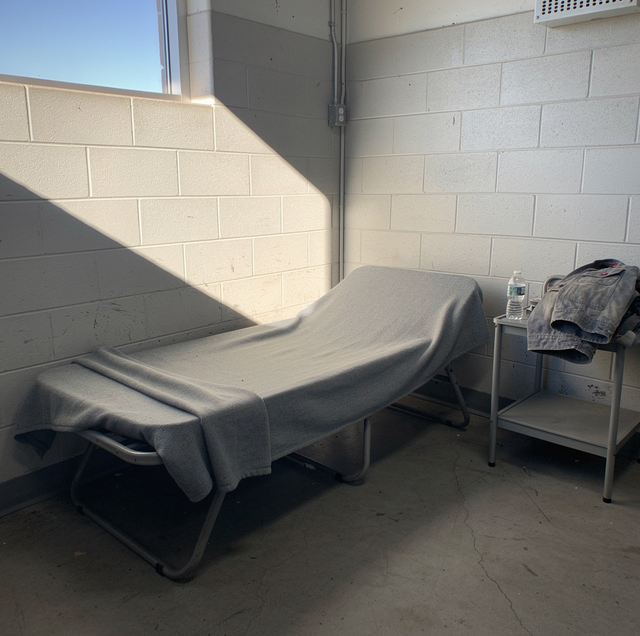
The blanket on the folded cot still holds the shape of whoever slept under it last. Dispatch centers, security posts, and plants that never close keep a cot, a bunk, or a break-room couch for anyone who needs rest between calls, and the bedding is shared along with the furniture. That setup is where the usual answer about workplaces shifts. Bed bugs settle where people sleep, and an office floor is mostly a place they are carried through. A room set aside for sleeping is a different kind of place.
Why a Room for Sleeping Differs From an Office Floor
A bug that rides into a building on a bag or a jacket and ends up at a desk has little to stay for. The person in the chair is awake and moving, and the nearest hiding places are far from anywhere that person holds still. A cot changes that. It puts a body at rest within reach and gives the bug tight shelter within a few inches of the sleeper, which is what a settled population needs.
Nothing here depends on how clean the room is kept. A cot wiped down every shift and a couch vacuumed nightly still give a carried bug the same two things: a sleeper and a seam to rest in. That difference is the whole point. One bug on a desk and one bug on a cot do not carry the same weight, yet neither one proves by itself that a colony exists. The cot find sits closer to where bed bugs live, so it deserves a call.
What Shared Cots, Bunks and Lockers Can Hold
Shared sleeping gear belongs to nobody. Nobody strips it down and looks along the seams the way they would with their own bed, so a problem can build for a while before anyone sees it. The areas to check are the seams, folds, and tags of a mattress or couch cushion, the underside of the sleeping surface, the edge where a sheet tucks in, and the wall behind a cot pushed against it. Bed bugs fit into gaps that thin.
Spare bedding adds another spot. Blankets and pillows stacked together in a closet put clean-looking pieces next to any piece that holds a bug. Piled blankets also hide the bug's own marks, because droppings and shed skins sit in the folds where nobody looks. The break-room couch used for naps belongs on the same list as the cots, and a locker beside the cots is part of the same space.
Shift Change and the Signs It Turns Up
Shift change is the moment someone strips a cot or straightens a couch and sees something. The signs are small:
- Dark spots on a sheet, a cushion seam, or the edge of a mattress, which can be droppings
- Rusty or reddish smears on bedding
- Pale-yellow shed skins in a fold or along a seam
- A live bug, which is the clearest sign and the least common one to catch
Leave all of it alone. A find on a cot is worth a call the same day it is seen. Do not move the cot, carry the bedding out, or throw anything away. Moving things scatters bugs into places the inspection then has to search. A clear close-up photo can be texted to John, and he replies.
A spot is not always a bed bug. Another pest or plain dirt can leave a similar mark, and the inspection settles which it is. It also shows whether the find is one carried bug or something that has settled in.
How Treatment Fits Around Round-the-Clock Staffing
In the workplace, the inspection starts by identifying areas at risk, and a room where people sleep is among them. The plan, prep, and timing for each area are set with management, and treatment is applied by hand to the areas identified in the plan. The residual keeps working for several months, killing every stage, and a second visit about two weeks later is timed to the egg cycle. A one-year warranty comes with the work.
Ask John to list every area in the plan by name, including the rest area, the couch, and any closet of spare bedding, so everything treated is covered by the same 4 empty hours.
Treated areas stay empty for 4 hours while the treatment dries. For an operation with no quiet hour, the part to settle early is where the crew rests and works during those 4 hours; that management decision is made with John when the plan is set and not discovered on treatment day.
Keeping the Problem From Following People Home
A rest area and the crew's homes share the same people, so a find at one is a reason to consider the other. Treating the rest area alone leaves the job half done if a crew member's own bed holds bugs, and checking a home alone leaves it half done if the cots do.
A worker who finds signs at home or hears about a find at work and wants to be sure can call for the free in-home inspection. A home is seen as a job in its own right.
Where people rest, the question changes from whether a bug passed through to whether it found somewhere to stay, and only an inspection answers that.
Frequently Asked Questions
It belongs on the list too. Bed bugs follow the sleeper, not the label on the door, so a couch in an office or a padded chair in a control room where someone dozes through a long night is worth naming when the inspection is set up, even if nothing has turned up in the rest area itself.
Name it on the call. A folding privacy screen has fabric panels stretched over a frame, with hinges and seams where the cloth meets the edge, and it stands within a few feet of whoever is asleep. Leave it standing where it is so the inspection sees it as it was used.
Folding changes where the gaps sit, not whether they exist. The fabric deck closes on itself, and the hinges fold shut, so a cot stored folded keeps whatever was in its seams. Leave it the way it was found, folded or open.
They change what goes into the laundry and nothing else. The seams of the cot pad, the frame, and the underside remain the same, so a paper or single-use sheet does not alter what the inspection assesses.
No. A storage closet holds the spare blankets and supplies, so a cot set in among them puts anything it carries beside everything else the crew uses. It stays where it is, and the inspection decides what happens to it.
Keep it at work. A cot carried out to a car and into a house takes anything in its seams to a second place that may have had nothing, and the cot gets its look where it stands.
Clear up what a cot or a break-room couch is holding — a free inspection shows whether anything has settled in the rest area, and where. Bed Bugs Arizona serves Phoenix and towns across Arizona. Call 623-451-0541.