

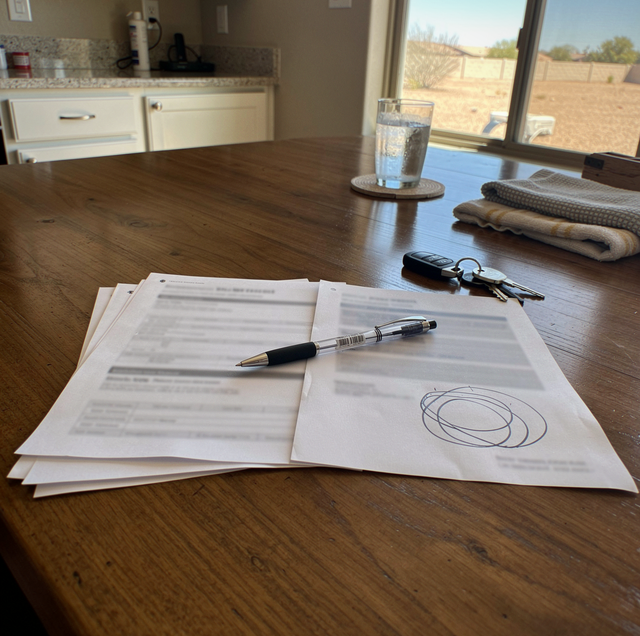
The line circled in pen sits on the three-page sheet and has no match on the one-page sheet beside it. A second circle lands lower down, then a third. Two companies, one home, and two sets of instructions that do not agree. Two reasons can explain a gap like that: a prep list follows the treatment method it was written for and reflects how far the problem has spread. Neither reason makes either sheet wrong, and anything else that went into another company's sheet is for that company to explain.
A Prep List Follows the Treatment Method
John Taylor has worked in pest control since 1982 and does the inspections and treatments himself. His list is built around one method, applied by hand with a hand sprayer and a hand duster to every room, all the furniture, and the baseboards. Each step on his list addresses something that hand application requires, so the list reads as instructions for opening the furniture and baseboards for the work.
A list written for a different method answers to that method's needs, and those needs can differ completely. John does not do heat, so he has no list for it. For a company that does, the question worth asking in plain words is what has to come out of the home before the job. That answer belongs to that company, and it is one reason a sheet built for another method can read like a different document from John's.
How Far the Bugs Have Spread Changes the Amounts
One method still produces different amounts of prep at different homes. How much washing and clearing a home needs depends on how far the problem has spread. A light infestation requires much less than a heavy one, and John settles on the amount at the inspection after he has looked at the home, then explains why each part of it matters. Setting that amount is a large part of why the inspection comes first, and two homes that seem alike can still need different amounts.
That order is deliberate. The five steps are the frame, and the inspection sets the amounts inside the frame: how many beds, how much laundry, how much clutter stands between the technician and the furniture.
Two sheets can disagree with no disagreement about method at all. One may have been sized for a larger problem than the other. Whether that describes your pair depends on who wrote each sheet and when, and the sheet alone does not say.
Reading a Shorter List Correctly
The one-page sheet is not automatically the lighter job, and the three-page sheet is not automatically the heavier one. Length alone cannot settle either.
On John's own jobs, a light infestation shortens the list, and a shorter list takes less time to work through, since prep time depends on how bad the problem is and how much is in the home. It does not shorten the treatment. Every room, the furniture, and the baseboards are still treated, and one step applies to every job, whatever the size: people and animals leave the home while the treatment dries. A short list comes from a smaller prep, never from a smaller treatment.
For a sheet from another company, the same two causes are open: a smaller problem, or a method that asks less of the homeowner. The sheet itself cannot say which. A longer list works the same way in reverse, since it can come from a larger problem or from a method with more to move. Treating the length gap as a score between the two companies reads more into it than the paper supports.
Questions to Ask Before Starting the Prep
Only one company will treat the home, so only one list governs the prep. That company is the right one to ask, and four questions fit in a short call:
- Method: Which treatment method was this list written for?
- Sizing: Was it set after someone looked at my home, or is it a general sheet?
- Purpose: What does this line protect, and what changes if it is left out?
- The gap: This line appears on my other sheet and not on yours. Does it apply to your job?
Mark every line that appears on only one sheet, using one color for each sheet, before you call. Read just the marked lines to the company doing the work and write its answer in the margin beside each one.
If the company is not chosen yet, the answers double as a comparison. A company that can name its method, say how its list was sized, and explain what each line protects gives you something concrete to weigh next to the length of its sheet. A company that cannot answer those questions before the work starts has told you something too.
Following One List, Not a Blend
Follow the list from the company that will do the treatment. A blend of two sheets answers to no single treatment. A step borrowed from the other sheet may serve a method this company is not using, and a step dropped from this one may be a step its work needs. For John's jobs, the warranty depends on the whole home being treated, the prep being done, and the second visit being kept, so the list he sets is the one that counts.
Two sheets that disagree are two answers to two different questions: what does this method need, and what does this home need. Put the questions to the company that will do the work, follow its list, and set the other sheet aside without calling it wrong.
Frequently Asked Questions
Yes. The company posts a downloadable prep sheet that carries the five steps. Treat it as the frame only: the amounts for your home, including how much laundry and clutter there is, come from the inspection and are not printed on it.
Yes. Having the paper on the table when John arrives lets you point to the exact lines that puzzle you, without needing to describe them from memory.
No. Nothing on John's list begins before he has inspected, and that includes the lines two sheets agree on, because the amount for your home is set after he has looked. If the other company is the one treating, ask it when its list is meant to start.
On John's list, stripping the beds comes before the wash step because the stripped linens go into that wash. A sheet that orders its steps differently may be built around the needs of another method.
On John's list, it does: clearing the clutter out of the service area is step 4 of the five, and how much of it your home needs is set at the inspection. A sheet with no clutter line may be written for a method that asks something different of the room, so treat the missing line as a gap to raise on the call, not a step to drop.
Tell John exactly what has been done when he comes to inspect. He sizes the prep from the home as it stands that day, so an accurate account lets him say what still needs doing and what can stay as it is.
Compare your two prep sheets with John at a free in-home inspection — he sizes the prep to your home and explains why each step is on the list. Bed Bugs Arizona serves Phoenix and towns across Arizona. Call 623-451-0541.