

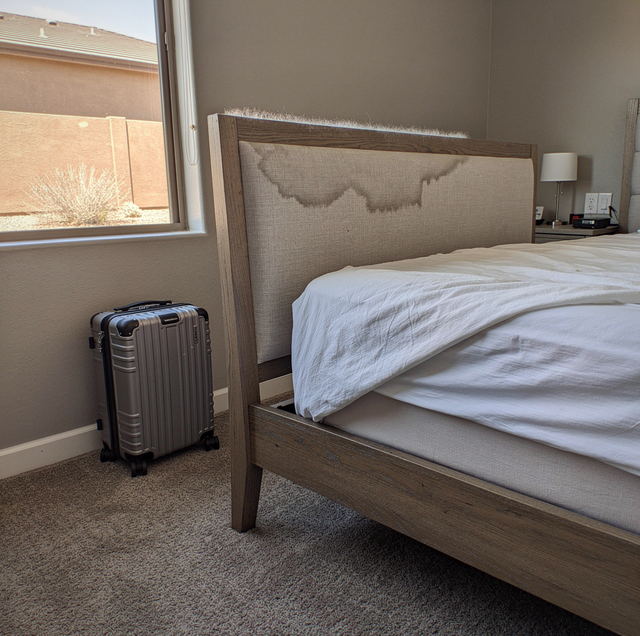
Three months after the second visit, the suitcase rolls back over the front door threshold, wheels clicking on the tile, and comes to rest beside the hall closet. The house has been quiet since the job. The beds are made, the bagged clothes went back into drawers weeks ago, and nobody has said the words "bed bugs" in a while. Then the thought comes in with the luggage: if something hitched a ride home, will the treatment that ended the first problem kill it? It can. It can also miss. Which of those happens comes down to where the residual sits, how a bed bug moves through a home, and what covers you during the warranty year.
Where the Residual Sits After the Second Visit
The treatment works in two ways. During the visit, a bed bug or an egg that the product hits directly dies within 7 to 10 minutes. That part ends once the treatment dries. What remains is the residual, a dried layer on treated surfaces that continues to work for several months and kills bed bugs at every stage, from newly hatched to adults.
Those treated surfaces are specific. The treatment is applied by hand to every room, to the furniture (beds, couches, recliners, and every other piece), and to the baseboards. Those are the places a bed bug walks when it moves between a hiding spot and a person. The residual covers what was in the home and treated across the two visits. It does not spread onto anything carried in afterward, and it is not on the clean sheets that went onto the bed when everyone came home after the 4 hours away.
The residual also has a working life, and "several months" is the honest span. Past that point, a treated baseboard reverts to a plain baseboard, and whatever a returning traveler might have counted on from it has run its course.
What Can Happen to a Bug That Crosses It Later
A bed bug carried into the house is in the same position as one that sat deep in a couch frame during the treatment. It has to come out to feed, and to reach a sleeping or sitting person it walks across whatever lies between. If that path crosses a treated bed frame, couch, or baseboard while the residual is still active, the bug encounters it.
That contact plays out more slowly than a direct hit during the visit. The dried residual irritates bed bugs; they try to get away from it, and the residual kills them. Between the two visits, that is what happens to stragglers and newly hatched bugs, and the same mechanism can reach a newcomer who arrives later and walks onto treated ground.
Whether it does depends on the route. A female that crawls out of a bag and heads for the bed crosses treated wood and fabric on the way. One that stays tucked in the seam of the suitcase, or in a backpack left on the closet floor, may not touch a treated surface for some time.
Eggs follow the same logic. If a new arrival lays eggs somewhere untreated, those eggs hatch when the room's warmth allows. The original job's second visit came about two weeks after the first, the span within which eggs hatch, but in a warm house eggs can hatch sooner than two weeks, while a cool room stretches the wait. So a newcomer's young can appear on no fixed date, and each one that leaves an untreated hiding spot to feed can meet the residual on its way to a person.
Why a Treated Home Can Still Pick Up Bed Bugs
The residual works on contact. It does nothing at the front door, and nothing about it keeps a bug from coming in. A few bugs that never cross treated ground can feed, mate, and lay eggs without touching it.
Three gaps make that possible. Anything brought in after the job, from the suitcase itself to a box of hand-me-down clothes, was never treated so that a bug can rest in it for days. A person sitting on or beside that untreated item offers a meal without the bug crossing anything treated on the way. And once the residual has run its several months, the treated surfaces stop doing their part altogether.
None of that is a fault in the treatment. It describes what a residual is: a reason a bug that wanders onto treated wood is in trouble, and no promise that a bug cannot arrive. The job ended the infestation that was in the home at the time. A new trip, an overnight visitor, or a secondhand purchase is a new event.
How the Warranty Year Handles New Arrivals
Because the residual cannot promise a clean year, the warranty carries that weight. During the warranty year, a return of bed bugs is covered, warranty calls are scheduled as soon as possible, and there is no charge for the visit. The warranty does not get into whether a bug is left over from the first problem or came in new, so the suitcase question never turns into an argument. Renewing does not prevent anyone from bringing in new bed bugs, but while the warranty is active, they are covered.
That coverage rests on the original job having been done the full way: the whole home treated, the prep completed and the second visit made. Those steps were part of the first job, so a household that went through it carries the coverage that matters for a bug found after a trip.
Habits That Keep New Arrivals Few
No habit guarantees a clean year. A few of them cut down how many bugs get a foothold and how long one goes unseen.
Sheet changes: When the sheets come off, look along the edge of the mattress and the headboard. Small blood spots on the sheets are among the earliest signs. Look, but leave the bed in one piece.
Clutter: Piles near beds and couches give a new arrival untreated places to hide and make a bug harder to see. With fewer piles, a bug spends more of its time on treated, visible surfaces.
Calling at the First Sign
If you see a bed bug, or think you have, make the call that day. Waiting a few weeks to see whether more show up gives a newcomer time to lay eggs, and the warranty visit exists for exactly this situation.
Until the inspection, leave the room as it is. Moving furniture, hauling bedding through the house, or dragging a mattress to the curb can carry bugs into rooms that had none, and it gets rid of things that could have been kept.
After a sighting, leave the bag or box the bug came out of closed and where it sits, whether a suitcase, a backpack or a carton. Other bugs can still be tucked into its seams until John looks it over.
A residual that lasts several months makes it hard for a newly arrived bed bug to cross every treated surface it touches. It has no say over what comes through the door. The warranty year covers that part, and an early call keeps one stray bug from growing into a second problem.
Frequently Asked Questions
No. The sheets cover the mattress top, but the bed frame, the headboard, and the baseboard beside the bed stay exposed, and those are the surfaces a bug climbs on its way up to a sleeping person.
The second visit was a lighter pass than the first, more of a freshening up of the same treated surfaces. The residual a newcomer meets in the months after the job comes from both passes.
It can. The residual dried onto the piece itself, so a treated couch or dresser shifted across the house keeps it on the surfaces that were treated, and in a whole-home job the baseboards of the room it moves into were treated too.
Yes. A renewal comes with one scheduled treatment of its own, so a renewed year does not rest on whatever is left of the first job's residual once its several months have run.
It ends at the end of the warranty year unless the renewal visit is completed before the expiration date. A bug found after a lapse starts again with a free inspection.
Both, in places. The treatment goes where bed bugs hide, into the cracks of a frame as well as onto its faces, so treated product can sit inside some of those gaps as well as on the faces of furniture and baseboards.
Keep the warranty year working for you — at the first bed bug you see after a trip or a visit, John comes back at no charge while the warranty is active. Bed Bugs Arizona serves Phoenix and towns across Arizona. Call 623-451-0541.