

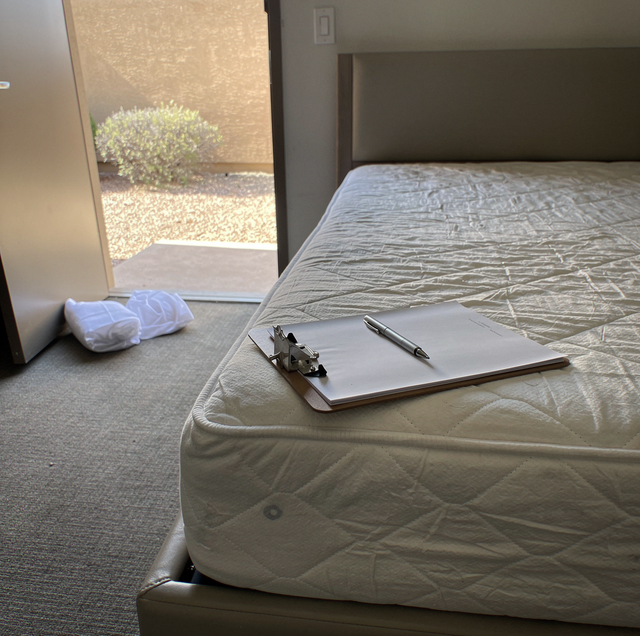
Three room numbers run down the sheet in the supervisor's hand: 418 from the first week of the month, 107 from the second, 330 from last week. Each came from a different guest, each was handled when it came in, and the housekeeping cart parked outside room 212 is about to start on another floor. On paper, the sheet reads like a hotel that cannot get rid of bed bugs. It can just as well describe three separate arrivals, or one source that nobody has found yet.
So why do bed bugs keep showing up in different hotel rooms? The sheet alone cannot say, and how a manager reads it decides which rooms get looked at next.
What a Scatter of Rooms Can Mean
Three readings fit the same sheet of paper.
Separate arrivals: A hotel takes in new bags every day. Any guest who has bed bugs at home or picked some up during an earlier stay can bring a few in. Three reports can be three unrelated trips that happened to end at the same front desk.
One source feeding others: A room with an established problem can pass bugs to other rooms via anything that leaves it and goes elsewhere. The reported rooms then share a starting point, and that starting point may not appear on the sheet at all.
A room nobody reported: Bed bugs feed on sleeping people and then go back into hiding. A guest can check out without seeing a bug or noticing a mark, and the next guest can do the same. A room can carry bed bugs through a run of bookings before anyone says a word, so the date of a report lags the date the bugs arrived, sometimes by a long way.
The sheet cannot separate these. Room numbers far apart do not prove separate arrivals, and two rooms on the same corridor do not prove that one fed the other. What tells them apart is what each room holds when a trained eye looks: how much spotting, how many eggs and casings, and where.
How Bed Bugs Move Between Rooms in a Working Hotel
Bed bugs spend the daylight hours pressed into narrow gaps close to where people sleep: seams, joints, screw holes, the folds of upholstery. When the object they are hiding in gets picked up and carried, they stay put inside it. In a hotel, plenty of things change rooms.
Furniture that changes rooms: An upholstered chair, a nightstand, or a headboard moved from one room to another during a repair or a refurbishment carries whatever lives in its joints and fabric. A piece taken from a room with bed bugs and set down in a room without them is a direct route and leaves no trace on a report sheet.
The same people on different stays: A regular business traveler, a sports team on a road trip, a work crew booked for several weeks. If bed bugs live where those people come from, each stay can bring a few more in, and each stay lands in whatever room the desk assigns. One source at home becomes several rooms at the hotel, and none of those rooms did anything to earn it.
Things that pass through every room: Linens and equipment also travel from room to room on every shift, and a bug can ride in the folds of a stripped sheet, though nobody can name that path as the cause until an inspection finds bugs along it.
The route matters for what comes next. Separate arrivals call for a fast answer to each report as it comes in. A source room or a moved piece of furniture calls for finding it, because treating only the rooms where guests complained leaves the source exactly where it was.
Rooms Treated One at a Time and What That Leaves
When a reported room has bed bugs, that room gets treated. The treatment is Pro-Treat Plus, applied by hand to the room's bed, furniture, and baseboards, with a residual that keeps working for months, so the control does not stop when the next guest checks in. Everyone stays out for 4 hours while it dries, and the room can be sold again the day after.
A second visit about two weeks later catches the bugs that hatch from eggs laid before the first visit. If bed bugs turn up in the same room again during the warranty year, John comes back to address it, provided the prep was done and the room was ready for the second visit.
That work answers the report it was called for. It says nothing about the room across the hall, the room the armchair came from, or the room the regular guest stayed in last month. None of those have been inspected or treated, and none is covered by work done elsewhere.
So a sheet that keeps growing has two kinds of entries, and they mean different things:
- A treated room that appears again: A warranty call for that room, handled as one.
- A room that has never appeared before: A new question. It may be another separate arrival, or the first sign of a room that has been feeding the others.
Three treated rooms close three reports. Whether a fourth room is the source stays open until somebody looks at it.
Signs Staff Can Watch for Between Guests
Housekeeping sees every room at every turnover, which puts them in the best position to notice the first sign. The signs themselves are small: a live bug, tiny dark spots of dried droppings, pale empty skins, whitish eggs tucked into a seam. They collect on the parts of the bed that never go to the laundry and on the upholstered furniture nearest the bed.
John trains hotel staff to spot bed bugs when a hotel asks, and staff who know what they are looking at turn a vague complaint into a precise entry. A room with a sign stays as it is until John has looked.
The sheet in the supervisor's hand becomes something an inspection can use when each line carries more than a room number:
- the date and which guest stayed in it
- what was seen, and exactly where (mattress seam, chair cushion, headboard)
- who found it: a guest, a housekeeper, maintenance
- any furniture moved into or out of that room in the weeks before
- whether the same guest or group has stayed in other rooms on the sheet
The last two lines connect the rooms. A chair that went from 418 to 330 during a repair, or a crew that stayed in 107 and then 330, turns a scatter into a pattern an inspection can follow.
What an Inspection Across the Property Settles
The inspection after a guest report is free. John starts with the reported room and tells management what he found and how serious it is. With a scattered sheet, bring the whole thing to the call, including the furniture moves and the repeat stays, because it shapes which rooms he looks at beyond the first one.
Taken together, the rooms read the pattern:
- Fresh signs in each reported room, quiet everywhere else: Fits separate arrivals, each handled as its own job.
- An established problem in a room nobody reported: Fits a source, and that room becomes the priority.
- Bugs in a piece of furniture that has moved: Points along the path that piece traveled.
- A reported room comes up clean: That room is answered, and the report goes back on the sheet for what it was.
How many rooms get checked and in what order are worked out with management for that property, and John sets out the plan before anything is treated. A hotel that wants rooms checked when nobody has reported anything can ask for scheduled inspections, which John offers to hotels that request them.
Where guests and staff noticed something is a different list from where the bed bugs started. Read it as a record of noticing; look at the rooms it points toward and the rooms it skips, and the next entry, if one comes, will mean something.
Frequently Asked Questions
Yes. A sofa bed adds a second sleeping place with its own thin mattress, a folding metal frame, and cushion seams that guests also sit on through the day. Write down whether the sofa bed was used, and mark it as its own spot when a sign appears there.
It does. A bed skirt lies between the mattress and the box spring and hangs against the frame, so its stitched edge and the fold tucked under the mattress sit right at a resting spot, and it seldom goes to the laundry with the sheets.
It can. Note which bed the guest slept in and which stayed empty. Signs built up on a bed nobody used that night point to bugs that were in the room before that guest arrived.
Yes, with the exact spot. A bug on a lobby chair or a hallway carpet came from somewhere, on someone passing through or out of a room nearby, and where it turned up can tell John which rooms to look at first.
No. Nothing about floor level or distance from the entrance draws bed bugs to a room; an occupied guest room is what they need, wherever it sits. A sheet spread across several floors is an ordinary pattern for that reason.
Not to whether bed bugs arrive, since they come in on people and their belongings and a new property with full rooms gets the same arrivals as an old one. Older furniture with loose joints and worn seams does give them more places to settle once they are in.
Give John the full sheet of reported rooms — a free inspection that starts with those rooms shows which ones hold bed bugs and how settled each problem is. Bed Bugs Arizona serves Phoenix and towns across Arizona. Call 623-451-0541.