

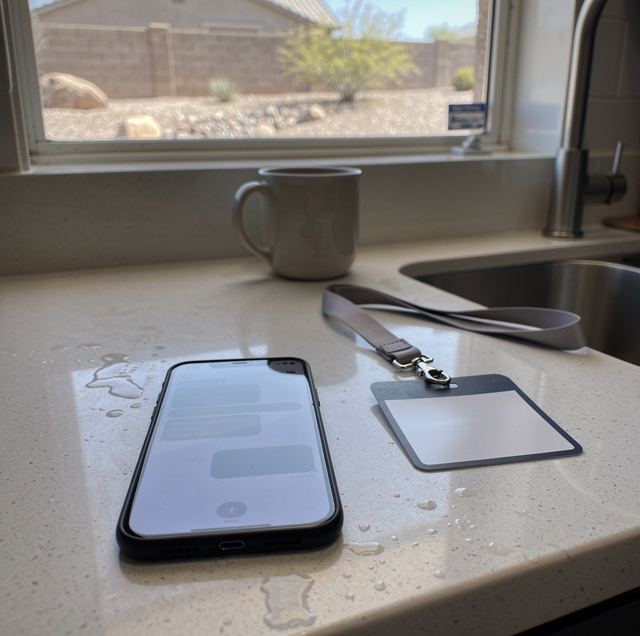
The employee badge sits on the kitchen counter at 6 a.m., next to a phone with a message to a supervisor that stops partway through: "Before I come in today, I should let you know we found bed bugs at home and." Nothing follows the "and." Two earlier versions have already been deleted. Sending it feels like owning up to something shameful, and holding it back feels like hiding something from the people who share the building. Neither feeling answers anything. What the message is worth depends on a handful of facts that can be sorted out before the thumb goes anywhere near the send button.
The Stakes at Work Are Narrower Than They Feel
Bed bugs settle where people sleep, so an office floor, a shop, or a break room is rarely where an infestation takes hold, though it can happen, and bed bugs at home do not, by themselves, mean bed bugs at work.
A sighting is what raises the stakes. A bed bug found on you during the workday, on your bag beside your desk, or on the desk itself turns a private problem into one the workplace has to handle, because the bug is now in a shared space and someone there has to decide what happens next. Without a sighting, a message to a supervisor is news about a home. With one, it is news about the building as well.
The part that weighs heaviest is rarely practical. People hold back because bed bugs feel like a judgment on whoever has them, and they are nothing of the kind. Bed bugs are hitchhikers, and anyone who leaves the house can bring them back. Having them says nothing about how a home is kept.
What a Workplace Can Do With the Information
Every decision on the workplace side belongs to management. It can call John to inspect the building, and that inspection shows whether there is anything to treat there, and where. Whether to make that call, and when, is the employer's choice.
Who else hears about it is management's decision too. Some workplaces tell everyone in the building that a bug was found so that people can keep an eye on their own homes and rumors have less to feed on. Others keep the circle smaller. An employee who mentions bed bugs at home cannot steer which way that goes, and nothing on the workplace side promises discretion on anyone's behalf.
One practice holds wherever bed bugs are handled with care: nobody blames or singles out the worker thought to have brought them in. Stigma makes bed bugs harder to treat, since a person who expects to be blamed has every reason to wait before calling anyone, and the bugs at home keep breeding while they wait.
What a workplace cannot do is fix a home. Bed bugs that came from a home remain a home problem until that home is treated, whatever the building turns out to hold.
Work Belongings While the Home Waits
Work things travel between two places every day, and while a home holds bed bugs, anything that rests near their hiding places can carry one. No routine at the front door closes that route while the home still holds bed bugs. Treating the home is what ends it, because it removes the bugs that the belongings would otherwise be carrying, and the residual it leaves behind keeps killing every stage for several months afterward.
Until then, the most helpful step at home is restraint. Nothing gets moved to a different room, packed up, or set aside before the inspection, because shifting things around spreads bed bugs into rooms that had none and blurs the picture of where they are.
At work, if a bug does turn up, the useful steps are just as short:
- Leave the spot alone: The desk, the chair, and whatever the bug was on stay exactly where they are.
- Keep it in one piece: Nothing gets taken apart to look inside.
- Call John: Say where the bug was found and what it was on.
Those steps keep a sighting readable, so an inspection can show whether one bug passed through or whether something has settled in.
Discretion and How the Home Job Runs
The home side runs between you and John. The inspection is free, John does it himself, and it carries no obligation to book anything afterward. If he finds bed bugs, he treats the whole home, and a second visit follows about two weeks later.
The visit is arranged around the home and the person who lives there, and nothing about how it runs depends on what the workplace has been told.
What the home job does give you is something concrete to say, if you choose to say anything. A date for the inspection, a date for treatment and a second visit two weeks after it are firm details to offer.
Deciding What to Say
No single answer fits every job, every manager or every home. What each choice involves can still be laid side by side.
Saying something now: Management gets the chance to decide about the building before any sighting rather than after one. A message built on facts lands better than one built on guesses: what was found at home, whether anything has turned up at work, and what is booked. Speculation about where the bugs came from or who else might have them adds to worry without giving anyone anything to act on.
Waiting until the home has been inspected: The home job runs the same way whether or not work hears about it, and an inspection turns a suspicion into a finding. A message sent afterward can indicate whether bed bugs were found and when the visits occurred. If a bug turns up at work in the meantime, the leave-it-alone steps apply.
A bug already seen at work: The workplace has a live sighting to handle, and what you know about your home bears on it. That shifts what is at stake. The choice of what to say still belongs to you.
Questions about time off, pay, workplace policy, or what an employer may ask sit outside bed bug work altogether. The employer's own written policies or an attorney can answer those questions.
Bed bugs at home follow a set path to an end: an inspection, a whole-home treatment, a second visit. How much of that the workplace hears is a separate decision, and it gets easier once the home side has firm dates. The half-written message can wait until there is something certain to put after the "and."
Frequently Asked Questions
It can. A workplace that learns where bed bugs are coming from may choose to offer an employee information and help, including a home inspection, because a treated home reduces the risk of bed bugs being carried back into the building. Whether to make that offer rests with management, so an employee can ask, and the answer is theirs to give.
No. The home is a separate job of its own, sized and priced at the home inspection, and nothing booked for the workplace reaches into it.
A short note helps whoever handles it. Record the date, exactly where the bug was found, whether it looked young or adult, whether it was alive or dead, and anything done about it since. Each sighting gets its own line, so a second find can be read against the first.
It can ask. John trains facility staff to spot bed bugs, and whether to bring that in is management's call. Once it is in place, the people most likely to notice a bug at work know what they are looking at before anyone has to guess.
Yes. In the workplace, John works out with management which areas get looked at and when, so the employee who made the first call hands the matter over to whoever management names.
Those are buildings John does not take, along with movie theaters, libraries and public buildings, so the building side there runs through whoever the employer brings in. The home side does not change with the workplace: a home is a home job, with the same free inspection.
Handle the home side on its own track — John's free in-home inspection answers the question at home, whatever you decide to say at work. Bed Bugs Arizona serves Phoenix and towns across Arizona. Call 623-451-0541.