

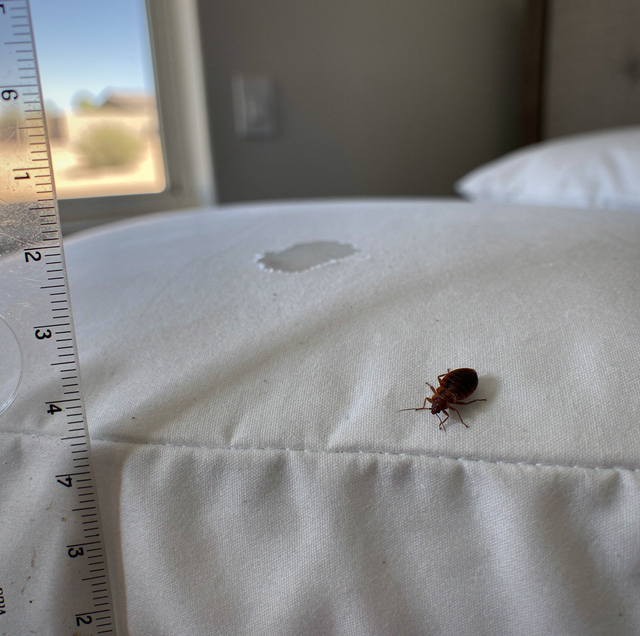
The third photo of the bug on the bedside table came out as a pale smudge. The flash had bounced off the white pillowcase and bleached a small brown body into the background, leaving nothing on the screen to identify. A bug that small gives the camera only a handful of pixels to work with, so light, distance, and steadiness decide whether a picture can be read. What goes into the frame matters just as much.
What a Useful Photo Needs to Show
A photo of a suspected bed bug has one job: to let someone who knows the insect see its outline, color, and body shape, and where it was sitting. One frame rarely does both, so plan for three.
The bug: Fill a fair share of the frame with it, with the whole body in view if the bug is lying in the open. An adult is about the size of an apple seed, flat and oval, brown when it has not fed lately and reddish and swollen when it has.
The spot: A second picture from further back shows what the bug was on: a mattress seam, the back of a headboard, a couch cushion crease. The surroundings tell John what kind of place it picked, which the close-up cannot.
The marks beside it: Dark specks, rusty stains, and pale skins near the bug belong in the shot or in a shot of their own. They get their own section further on.
Take the pictures where the bug is, and leave the bug there. Do not nudge it onto a plainer background, do not lift the sheet for a cleaner angle, and do not pick up the pillow for better light. Moving things can send the bug out of sight, and the spot loses its value as evidence.
Light, Distance and Focus
A built-in flash sits almost against the lens, so it throws a flat burst straight back off pale fabric. The bug's edges vanish, and the sheet blows out to white. A steady light from the side does the opposite: a room lamp or a flashlight angled so the beam grazes the surface casts small shadows on the edges of the body and the weave of the cloth, and the shape stands out.
Every phone camera has a minimum focusing distance. Closer than that, the picture goes soft; however, the hand is still. Start further back, move in until the bug's outline looks crisp on the screen, and stop there. If the bug is still small in the frame, the picture can be cropped afterward without losing the captured detail.
Let the camera settle on the bug's body, not on the fabric around it, before pressing the shutter. A camera can grab the nearest high-contrast texture, which on a pillowcase is the stitching.
Brace both elbows against your ribs or on your knees, and on some phones fire the shutter with the volume button. Pressing the on-screen button at arm's length shakes the camera at the moment the bug is sharpest.
If the bug is walking, any picture will blur, so wait for it to pause. Do not herd it, block it, or try to hold it still.
Putting Something Beside the Bug for Scale
A close-up removes every clue about size. A bug and a crumb can look identical on a screen, and the difference matters when someone is judging the picture from a distance.
Scale can be added in one of two ways. If the bug is resting on a hard, flat surface such as a nightstand top, the edge of a ruler can be laid down beside it without touching it. If it is on fabric, put nothing down, because even a light object can shift the cloth under the bug. The wider shot does the work instead: a button, a pillow tag, or an outlet plate already in the frame provides a known size for comparison.
Photographing Spots and Shed Skins as Well as Bugs
A sighting does not always involve a live bug. A person may find only dark specks along a seam, a rusty smear on a sheet, a pale-yellow skin the shape of a bug or a pinhead-size pearl-white egg. These count as much as the insect, and John looks for each of them during an inspection.
Photograph them where they lie. Do not brush, wipe, or pick at them, because a dark spot on fabric can bleed like marker ink and a skin can crumble. Light matters here too: the shed skins are pale and translucent, so glare from a glossy surface hides them, and a side lamp keeps them readable. Specks look best from a little further back, because at very close range the weave of the cloth fills the frame and the spot becomes one dark patch among many.
The wider shot earns its place with signs. Specks lined up along one seam read differently from specks scattered across a sheet, and that arrangement is visible only when the whole area is in the picture. Eggs are the exception: a phone can fail to resolve something that small at any distance, so photograph the spot they sit in as closely as the camera will still focus, and mention them in the text note.
What John Can and Cannot Tell From a Picture
Send the pictures with a short text note that includes where each one was taken, the day it was found, how many bugs or marks there were, and who sleeps in or near that spot. The photo line goes to John's phone, and a clear close-up of a bug gives him its body shape to look at, so he can reply by text.
There are limits. A picture of bites cannot show whether bed bugs caused them, because other things leave similar marks, and a rash or reaction is a question for a health care provider. A blurry or distant picture settles nothing, and neither does a picture of a plain stain. John does not promise an answer from a photo, and the free in-home inspection is what settles it. Carpet beetles and household dirt are things people send him as bed bugs, and he says so plainly when that is what turns up.
After the pictures are taken, leave the bed, the couch, and everything near them exactly as they were.
A good photo is a few steady seconds spent keeping a moment accurate for someone who was not there. The bug may be gone by the time the reply comes, but the picture and the note still hold what the room looked like when it was found.
Frequently Asked Questions
Fingerprints or pocket grime on the lens glass soften everything, and it shows up most on small subjects. Wipe the lens with a soft, dry cloth before the first shot. A damp wipe can leave a film.
On some phones, pinch-zooming only enlarges the pixels already captured, so the picture comes out coarse. Moving the phone closer, or cropping afterward, keeps the real detail. If the phone has a separate close-up lens setting, switch to it only if the screen image sharpens.
A brown bug can disappear into a brown print. Shift the light, not the bug: move the lamp until the bug's glossy back catches a highlight against the cloth. A second frame that includes a bit of plain fabric beside it also helps.
Photograph what shows, once along the opening from each side, and do not pull the seam apart. A partial view still retains the color and the body's edge, and the inspection reaches what the camera could not.
Photograph the place it was and say so in the text note. Describe its position in words, such as the second cushion from the left arm, so the spot can be found again. Leave that spot untouched.
Send the original with no filters or brightness changes. Edits shift color, and color is what separates a reddish-brown bug from a dark speck. If the camera app has a built-in auto-enhance mode, switch it off first.
Send John the close-up, the wider shot, and a line about where it turned up — he replies by text, and the free in-home inspection settles anything a picture cannot. Bed Bugs Arizona serves Phoenix and towns across Arizona. Call 623-451-0541.