

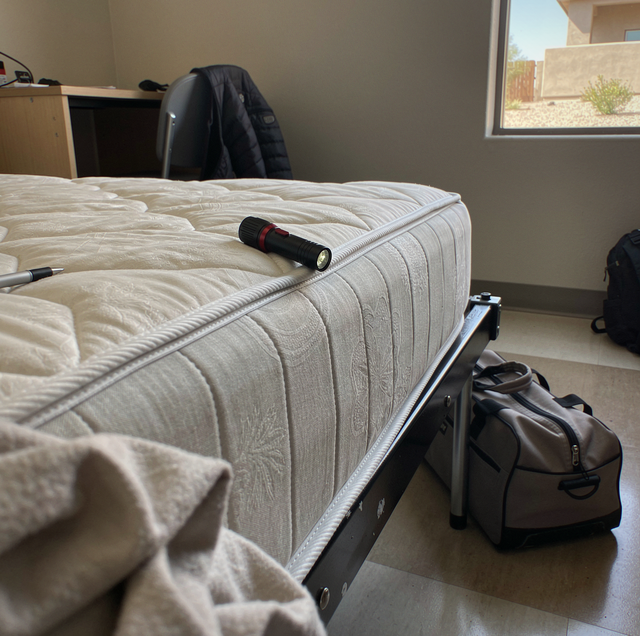
The duffel hits the entry floor with the laundry bag leaning against it, and the student heads straight for the refrigerator. Nothing about that scene is wrong, and nobody in the room is thinking about bed bugs. Still, a dorm is a place where a bug can end up in a bag without anyone seeing it, and the easiest moment to deal with that is before the car is loaded, with a second chance at the front door when the bags come in. Both moments take a few minutes and no special equipment.
Why a Dorm Can Send Bed Bugs Home
Bed bugs travel on people and their belongings, and they settle in tight gaps close to where people sleep and sit. A dorm packs a lot of both into a small space: beds a few feet apart, a desk chair, a lounge couch down the hall, and other students' bags set down on all of them. A student carries a backpack through all of those spaces in a single day.
In a room where someone sleeps, the bed is the likeliest place for them to settle, so it gets the first look. Young bugs and eggs are small enough to sit unseen inside a stitched seam, so a bag that looks clean can still carry something. Anyone can pick them up, and having them is not the student's fault.
What to Ask Before the Student Leaves
The conversation is short and works best as questions about the room rather than about the student.
- New marks: Has the student woken up with bites, or noticed small dark spots or rusty-looking stains on the sheets or mattress? Bites alone cannot settle anything, since they look like mosquito bites, but a bite together with a spot on the bedding gives the next step a direction.
- The bed itself: Has anyone pulled the sheet back and run a light along the mattress piping, the seams, and the tags? That short look is the one step a student can take alone before packing.
- Secondhand pieces: Did any furniture in the room come from someone else? Used furniture is one of the common routes in, and its seams and joints match the bed.
- The packing list: Which things are coming home, and which can stay? Bedding, a mini-fridge, a small chair, and a laptop bag are all easy to bring and take time to look over. A short list is quicker to check than a full carload.
If the student sees something, packing stops there, and the household hears about it before anything else is moved. A half-packed room is an easier place to sort that out than a house with the bags already open on the bedroom floor.
Arrival Day: Where Things Land First
Bags, bedding, the mini-fridge, and any small furniture wait in one spot away from the bedrooms and the couch until they have been looked over, with nothing sprayed or thrown out in the meantime. Clothes go through the washer and then the dryer on high heat before they reach a drawer or a bed.
Before the first night, the bed the student will sleep in at home gets the same seam check the dorm bed got: sheet back, light along the piping, seams and tags. The student sleeps there tonight, so that bed goes first.
If anything turns up, the rule is the same as for any find: leave things where they are. Moving bags, bedding, or furniture to another room to "get it away" carries a bug into that room.
Signs to Watch for in the First Weeks Home
In the weeks after the student arrives, the student's bed is the first place to look: dark spotting along a seam, a pale shed skin near the edge of the mattress, and small spots on the sheets. Bites are the weakest evidence of all, since several other things can cause similar welts, and a strong reaction, swelling, or signs of infection warrant a visit to a health care provider. Changing the student's sheets and glancing at the seam each time is worth a few seconds.
When the House Needs a Look
A sign on the bedding, a bug of any size, or a find at the dorm end before leaving is enough to prompt John to call for a free in-home inspection. The same goes for a student who simply returned from a room that worried them. John does the inspection himself, and if he finds nothing, he says so.
Until he arrives, do nothing: no moving furniture, no throwing out a mattress, no bug bombs or store sprays. Those steps can scatter bugs or destroy things that could have been kept. If he does find bed bugs, the job is a whole-home treatment with a second visit about two weeks later.
The household cannot control who slept in a dorm bed last year, and it does not have to. What it controls is the short distance between the car and the bedrooms, and a few minutes spent there decide whether a student's visit is only a visit.
Frequently Asked Questions
The drawers sit inside the frame, right under the sleeper, so their runners and back corners get the same light as the mattress seams before anything is packed. Clothes kept in those drawers come home as part of the bed's question, so they go into the bag only after that look. Pulling each drawer all the way out puts the back corners in view.
A futon has folds where the cover tucks in, and a loveseat has the gap between the seat cushion and the arm. Those are the two places to look before the piece is loaded, and a futon is easier to check laid flat, with the cover's zipper edge in view.
Look at the padded sleeve and the outside pockets, the places a hand goes into without looking. The console and its cords stay in the bag, and nothing gets opened up or taken apart. If something turns up near the electronics, John is the one to decide what happens next.
A weekend visit with one bag leaves one item to look over, and a move-out brings a carload. The dorm-bed check applies to both and repeats on every trip because each return to the dorm is a fresh chance to pick something up.
The checks are the same, except for what comes home: furniture that came with the room, such as a landlord's mattress or desk chair, stays behind. Only the student's own things need the seam look before they are packed, which makes the carload smaller and quicker to go over.
Not right away. It waits with the bags in the spot set aside for them. Leave it closed and upright, and do not tip it, open it up, or pull off the back panel to look. If a sign turns up later, mention the fridge on the call, and whether it needs a look is settled at the inspection.
Prepare for the trip home before the car pulls in — if a sign turns up after the student is home, John's free in-home inspection checks the beds and furniture and tells you what he found. Bed Bugs Arizona serves Phoenix and towns across Arizona. Call 623-451-0541.