

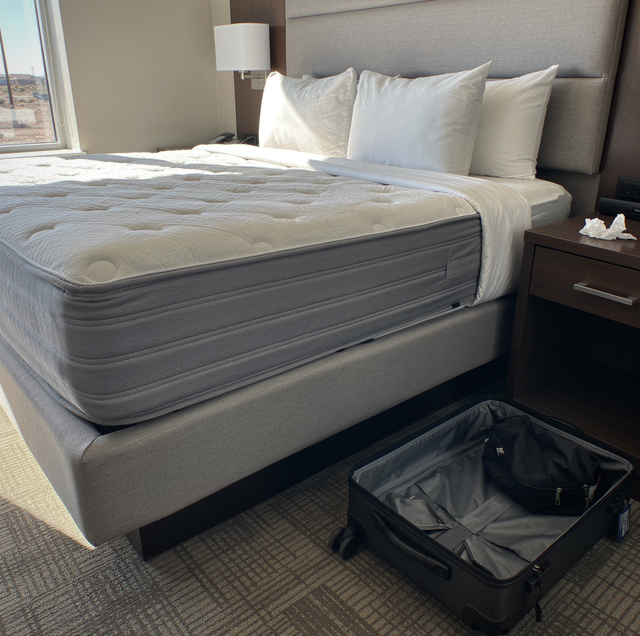
Folded twice and held out across the counter, the tissue carries the only evidence anyone has so far. The call came in at 6:40 a.m.: a guest on the front-desk line, describing a small brown bug crawling on the suitcase by the door; twenty minutes later the guest is at the counter with it pinched inside that tissue. The guest wants to know whether the room has bed bugs, and so does the manager. One bug on one bag gives everyone a starting point. Read as a verdict in either direction, it leads to the wrong next step.
What One Bug on a Bag Can and Cannot Tell Anyone
Start with identity. Until someone who knows bed bugs has looked at it, the thing in the tissue is just a small insect. If it does turn out to be a bed bug, the find tells you two things for certain: a bed bug was in this room, and at some point it was in contact with this suitcase.
It cannot tell you which way it traveled. Bed bugs spend the hours between meals pressed into narrow gaps, and a suitcase is full of them: zipper tracks, the piping along the edges, the channel a pull handle slides into, the seams of the inner lining. A bug tucked into any of those can ride in from somewhere else. A bug living in the room can climb into the same gaps after a night of feeding. In both cases it ends up exactly where the guest found it.
A lone bug also says nothing about numbers. It can be the only one present, or the first one anybody noticed. The size of a problem shows up where bed bugs rest and feed, and those places belong to the room.
Two Routes to the Same Suitcase
Arrived with the guest: A suitcase picks up bed bugs wherever it sits near a place they live: a home, an earlier stay, a friend's spare room. The bug hides in a seam during the trip. Once the bag is opened in a quiet room with a sleeping person nearby, the bug can leave the seam and head toward that person, drawn by body warmth and the carbon dioxide in exhaled breath. Found on the outside of the bag in the morning, it may have been on its way out, or on its way back in after a meal.
Came from the room: Bed bugs already in the room hide in the mattress, headboard, bed frame, nightstand, or an upholstered chair, and come out at night to feed on whoever sleeps there. After feeding, they retreat to the nearest dark gap, and an open suitcase on the floor offers plenty of those. A bag that stays in the room for several nights gives a resident bug time to find it.
Position adds a little, and only a little. Bed bugs stay close to where people sleep, so a bag by the door sits farther from the bed than one on the floor beside it. They also walk along the floors and baseboards, and the bag may have spent the night elsewhere before being moved to the door for packing.
The table below sets out the clues a manager may hear in the first hour, and what each one leaves open.
| Clue | Fits a bug that came with the guest | Fits a bug from the room | Settles it? |
|---|---|---|---|
| Bug on the bag, nothing seen in the bed | Yes | Yes, if the room's bugs are few or well hidden | No |
| Guest mentions trouble at home or at an earlier stay | Yes | Does not rule it out | No |
| Earlier report from this same room | Possible | Yes | No, though the room gets a close look |
| Dark spotting or pale casings on the bed or furniture | Does not rule it out | Yes | Only an inspection says what the marks are |
Reading the Room Itself
Signs that bed bugs live in a room build up where they rest. Their droppings are digested blood, and they dry as small dark spots, the spotting that collects along seams and in corners. Young bed bugs shed their skins as they grow, leaving pale, empty casings behind. Eggs are whitish and cemented into crevices. Live bugs gather in the same places.
In a hotel room, where those signs show matters. Sheets and pillowcases go to the laundry at every turnover, so anything that lands on the linens leaves with them. The parts of the bed that never go to the laundry hold the record: the seams, piping and tags of the mattress, the underside of the box spring, the back of the headboard where it meets the wall, the joints of the frame.
A room that has had bed bugs for weeks leaves marks in those places, and a room with none leaves none. A bug that arrived the night before has had no time to leave anything. So a quick look by staff cannot clear the room: a clean mattress seam fits a room with no bed bugs and a room where they arrived very recently. Staff can look, but nobody should lift the mattress off its base, unscrew the headboard, or take the frame apart. Those belong to the inspection, conducted in an order that preserves the evidence.
Why the Evidence Has to Stay Put
Room or guest, the answer depends on those marks, and cleaning removes them. Stripping the bed sends linens down the hallway on a cart, and any bugs in the folds ride along. Moving the mattress or pulling the bed from the wall can shake bugs loose into the carpet edge. After a cleaning like that, a room that shows nothing has stopped being a useful answer: it might never have had bed bugs, or the signs might have gone down the hall with the linens.
The guest's suitcase and clothes belong to the guest and leave with the guest. What the property controls is the room. Leaving it exactly as it was when the guest reported the bug keeps that evidence in place.
The Inspection Settles It Either Way
The inspection is free, and John starts with the room the guest reported. He begins at the bed and works out to the furniture around it.
If the room has bed bugs: He tells management what he found and how serious it is. The treatment is Pro-Treat Plus, applied by hand to the room's bed, furniture, and baseboards, with a residual that keeps working for several months, and the room can be sold again the day after it is treated. When other rooms need checking, he inspects those as well.
If it is another insect: He says so. The room question goes away with it.
If the room shows nothing: After a full look at the bed, the furniture, and the gaps around them, a room with no sign of bed bugs is the answer management needed about that room. Where the lone bug spent its time before it reached the suitcase is a separate matter that nobody can answer with certainty.
A bug in a tissue is a reason to look closely, and nothing more. Blame the guest, and a room with bed bugs goes back into use; blame the room, and a clean one gets stripped and handled as a problem it never had. A room left untouched until a trained eye has gone over it gives the one answer that holds up.
Frequently Asked Questions
A red smear means the bug had fed fairly recently, since the red is blood from its last meal still inside it. An unfed bed bug is flat and leaves little color when pinched. Neither result says whose blood it was or which bed it came from, so the smear dates the meal and leaves the location open.
It makes the bag more inviting without pointing either way. Bed bugs are drawn to the scent people leave on worn clothing, so a fed bug from the room has a reason to pick a bag of used clothes over a bare floor, and a bug that rode in among those clothes had little reason to leave them.
It does not. Bed bugs feed only on blood, so crumbs, dust and spills do nothing for them, and a spotless room offers them the same thing a messy one does: a person asleep for hours within crawling distance. Housekeeping standards decide how a room looks and have no bearing on whether bed bugs got into it.
It is one of the places a bag rests for the whole stay. Folding racks with fabric webbing stretched across a frame have gaps where the straps wrap around the rails and where staples or screws hold them, and those gaps are the width bed bugs pick. Leave the rack where it stands along with the rest of the room.
Bites cannot identify bed bugs, and they cannot be pinned to one stay, so they add nothing the room inspection does not settle. A guest worried about a reaction should see a health care provider.
Waiting only adds nights. If the room does have bed bugs, each night it stays in use is another meal for them and another chance to climb into the next guest's bags and leave the property with them. A second complaint would come after all of that.
Bring in a trained eye while the room is still as the guest left it — a free inspection shows whether the room itself has bed bugs. Bed Bugs Arizona serves Phoenix and towns across Arizona. Call 623-451-0541.