

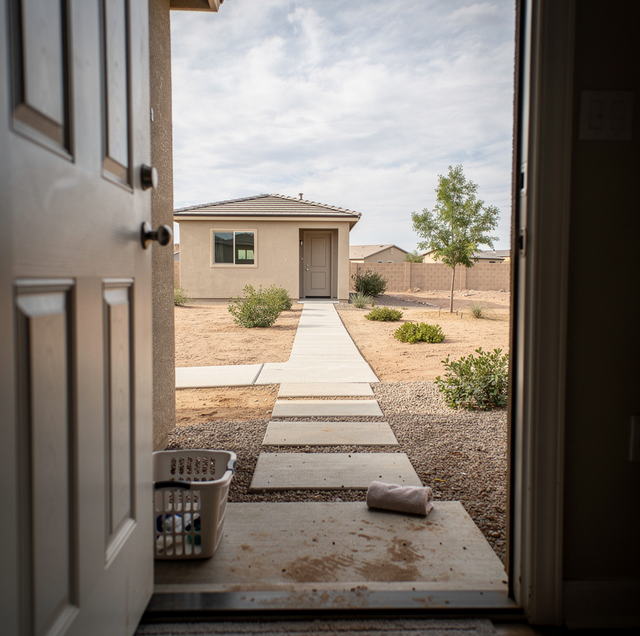
Last weekend's visitors left the guest house porch light on, and the stepping stones from the back door to its step look the same as they always have. What has changed is the main house, where a bed bug turned up this week. The small building at the end of the path now raises a question the household has never had to ask: does it get looked at too? Casitas, garage apartments, pool houses, and back-lot guest rooms all raise it, because each one has a separate roof and a bed in it, and bed bugs settle where people sleep.
Why the Guest House Comes Up
People raise the guest house because it feels like a different address. It has its own door, its own step, sometimes its own bathroom and kitchenette. The bed bug showed up in the main house, so the guest house seems either safely apart or suddenly suspect, and both feelings arrive before any facts do.
The treatment John does covers a whole home: every room, the furniture and the baseboards, applied by hand. A second building with beds and seats in it belongs in the conversation. Whether it falls within the job is not a call to make from the driveway, and guessing either way settles nothing. That is for the inspection. What the household controls is what he hears before he decides: every building that anyone sleeps in, named plainly on the call.
What Links the Two Buildings
Bed bugs settle in tight gaps close to the people they feed on, and on their own they get around only by crawling, a short way at a time. Going farther takes a ride.
The ride is the household. Bed bugs travel on clothes, bags, bedding and furniture, so the link between the main house and the guest house is the traffic between them: the person who sleeps in one and spends evenings in the other, the bag set down on a bed, the pillow carried across the path for a night.
That makes the question two-sided. A guest house used by people who also live their days in the main house shares a great deal with it. A guest house whose occupants seldom cross the path shares less. Neither description says what is or is not in the guest house's mattress seams. Each describes a route, and a route is half the picture. The other half is somebody looking.
Who Has Slept There and When
John's search follows the account the household gives him, so the account should be complete. The people and uses worth naming are these:
Regular occupant: A family member who sleeps in the guest house every night, with the nights they are away.
Overnight visitors: Friends or relatives who have stayed, with rough dates, including last weekend's.
Paying or hosted guests: If the guest house is rented out or takes visitors on a booking, say so. Anything about the rental terms is a question for the lease or an attorney. The call to John is about the bugs.
The place of the find: Which building the bug or the spotting turned up in, and where in it.
Who crosses the path: Who goes between the buildings, and when someone is home for an inspection.
A guest house that looks spotless tells John nothing about whether bed bugs are there, because cleanliness does not decide whether they are present. A guest house that looks lived in tells him just as little. The account of who slept where carries more weight than how either building looks from the porch.
Leaving the Guest House as It Stands
Until John has looked, the guest house stays as it is, the same as the main house. Carrying belongings from one building to another can spread bugs to parts of the property they have not reached.
The pull to act is strongest where a mattress is involved. A mattress hauled to the curb from the guest house might have been kept, leaving the question about that building without an answer. Leave the bed made, leave the bedding on it, and leave the closet as it is.
The people who use the guest house can go on describing what they have seen there. A firsthand account of a spot on a seam after a night out there is useful and worth writing down while it is fresh. Nobody needs to search the building to supply it.
The Inspection Decides the Rest
The free inspection is done by John Taylor, the owner, himself. The guest house can come up in the conversation at the door as easily as on the phone. The call can come before anyone is sure what the bug is, and the visit costs nothing.
Which buildings the visit and the plan take in is John's call, made on the property with the whole account in front of him. That call cannot be made from a description of a lot. It can be made by someone standing on the property who has just heard that a relative sleeps in the little building out back.
Bed bugs are hitchhikers, and picking them up is not a mistake the household made. The same goes for owning a guest house that people enjoy using. What helps is a complete account: every building where someone sleeps, who uses it, and when. Giving that account early costs a few minutes on the phone, and leaving it out means John is working on half the property.
Frequently Asked Questions
Say so, and describe the route: who carries the basket and which way it travels, clean items out to the guest house or used ones back to the main house. Laundry that has spent time in a guest house bedroom is a belonging that has moved between the buildings, and John can work from a described route. Keep the loads as they are until he has looked.
On the first call, with the arrival date and the bed the guest would use. A guest who arrives before the inspection would be sleeping in a building that nobody has looked at yet, so the date belongs in the account alongside the names of everyone who has already slept there.
Give it as a routine with times: when they come over, which rooms they spend the evening in, and when they head back. Say that it happens every night. A daily crossing is a different thing from a weekend visit, and the words "visits often" can hide the difference.
Say so, with roughly when and from which room. A mattress that once sat in the main house carried whatever it held across the path, so its history belongs in the account, and it stays where it is now until John has looked.
That question is for John to answer at the inspection, not to settle on the phone. What you can do is describe the layout: whether the roof runs continuously across the breezeway, and whether the doors at each end stay open or stay shut during the day.
No. Call the same number again and say what was left out: which building, who sleeps there, and since when. A short second call before the visit puts the building into the account while there is still time to plan for it.
Add the guest house to your list of buildings when you call for a free in-home inspection — John hears every place people sleep before he decides what the visit covers. Bed Bugs Arizona serves Phoenix and towns across Arizona. Call 623-451-0541.