

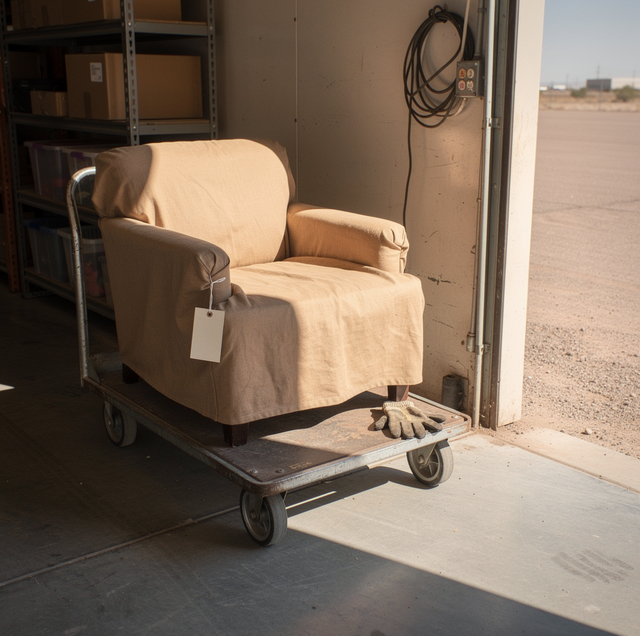
The return tag looped around the front leg of the armchair carries an order number, a delivery date from last month, and a checked box marked "changed mind." The chair still sits on the dolly at the receiving door, wrapped in a moving pad, waiting for someone to say whether it goes back out to the sales floor. Can a furniture store get bed bugs from returned items? Yes. A piece that spent its nights in a customer's living room or bedroom was within reach of any bugs living there, and bed bugs travel on belongings. The tag cannot say whether this chair carries any. What happens in the first few minutes at the door decides whether a problem, if there is one, stays on one dolly or spreads through the store.
How a Returned Piece Can Bring Bed Bugs Back
Bed bugs rest close to the people they feed on. In a home, that can mean the bed, a couch or the chair someone sits in every evening, and an upholstered piece is full of the narrow, dark gaps they hide in. The welting along cushion edges, the crease where the seat deck meets the arms and back, the folds around the buttons on a tufted back, the line of staples where the fabric wraps under the frame, and the wood joints inside the frame can all hold bugs and eggs.
Used upholstered goods reach a store by several roads:
- Returns: A piece delivered, used for days or weeks in a home, then picked up or dropped off.
- Trade-ins: An old sofa or chair hauled away the day a new one is delivered, sometimes after years in the same room.
- Floor-model swaps: Display pieces moved between locations or pulled from storage, each carrying whatever reached it in the last place it stood.
- Service pickups: A piece collected from a home for a fix and brought back through the same door.
Every one of those roads starts somewhere people sat or slept. Used furniture is one of the ways bed bugs move from one home to the next, and a receiving door handles used furniture as a matter of routine. For a household, one delivery is one more thing to look over; a store sees the same flow in reverse, piece after piece.
What the Receiving Area Can Check Without Taking It Apart
The check that suits a receiving door is a slow look with a flashlight while the piece stays on the dolly. Nothing gets unzipped, flipped, unstapled, or pulled apart, because each of those shakes bugs loose and moves them before anyone trained has looked.
The signs to look for are the ones bed bugs leave where they rest:
- Live bugs: Flat, reddish-brown and wingless, tucked into a seam.
- Spotting: Small dark dots of droppings that can bleed into fabric and gather in rows along seams and edges.
- Eggs: Tiny, pale and oval, set into creases and corners.
- Shed skins: Empty, pale-yellow casings left behind as the bugs grow.
Run the light along each line of welting, into the crease at the back of the seat deck, around every button and along the bottom edge of the fabric where it meets the frame. Spotting that turns up gets left as it is, unwiped, since the marks are part of what the inspection reads.
A surface look has a limit. Bugs and eggs tucked deep in a seam or inside the frame can sit out of sight of any flashlight, so a clean look is good news and still falls short of a clearance.
Handling a Piece That Shows Signs
When the look turns something up, the piece stays exactly where it is, on its dolly at the door. Nothing goes from that spot to the sales floor, the warehouse racks, or the dumpster. If a clear close-up photo is possible, it can be texted. Then call, as early in the day as possible, and say where the piece is, what was seen, and who at the store should be the contact.
The urge to get the piece out of the building is strong, and it is the move that spreads the problem. Furniture set outside, on the dock apron or beside the back lot, can pass bugs to the neighbors around it. Rolling it through the store to a corner out of sight lays a trail along the way. And a piece thrown out in a hurry can turn out to be one that could have been treated and kept. Every one of those choices waits until after the inspection.
Keeping the Showroom Floor in View
A showroom is a place people pass through. Shoppers sit on sofas, stretch out on display beds, and leave, and nobody spends the night. One bug on a display can be a passenger that arrived on a shopper and will leave the same way, or a sign that something has settled into a piece, and only an inspection tells the two apart.
The people best placed to catch a find early are the ones who straighten the floor every morning. Squaring up cushions and smoothing display bedding puts their hands and eyes on the same seams a flashlight check covers at the receiving door. A piece that came back as a return, passed its look and went out to the floor is worth that same morning glance for the days after it arrives, since anything hidden in it can show along the seams.
Nothing has to be found first for John to be involved. He can come out for inspections on a set schedule when no issues have been reported, and he can show staff what to look for, with both arranged through management.
How a Treatment Fits Around Store Hours
When bugs are found, the plan starts from the areas at risk, which John identifies at the inspection. Whether that reaches the receiving area, a back room, or a section of the sales floor is for the inspection to say. Management and John then settle which of those areas are treated and when, and what prep each one needs.
The treatment is Pro-Treat Plus, applied by hand, and the visits fall within normal business hours, when as few employees as possible are in the building, with the treated areas left empty for 4 hours, followed by a second visit two weeks later.
Every returned piece carries a little of the home it left, and that can mean nothing worse than a scuff on the arm. The store's part is small and specific: look before the piece moves, leave it where it stands when something shows, and let an inspection decide the rest. Done that way, one tagged chair stays one tagged chair.
Frequently Asked Questions
Leave the wrap on for the first look and shine the light through it wherever it is clear. Cutting or peeling plastic off at the dock frees anything trapped against the fabric, so the wrap stays on until the inspection.
Leave it where it stands and put a hold sign on it so no shopper or staff member sits or lies on it. The pieces touching it or set against it stay where they are too, so John can see the arrangement as it was.
Hold the pickup. A repair shop or a vendor's warehouse is another building, with its own staff and stock, and it would take on whatever rides inside the piece. Once the inspection has answered the question, the pickup can be rebooked.
Yes. A carpeted dolly deck and a quilted moving pad are both fabric surfaces a bug can grip, so neither goes onto the next delivery or back onto the rack with clean pads until the piece has been looked at.
They deserve a look as well. Wood case goods have drawer runners, glued corner blocks, and the groove where a drawer bottom sits. A nightstand sat beside a bed, and its top drawer was within reach of the pillow every night.
They can. A loose pillow or seat cushion sat on a sofa or chair in the customer's home, and its corner seams are the same kind of fold a bug uses on the furniture itself. One that comes back by itself gets the same flashlight look along its seams at the receiving door.
Pull John in on the first suspect return — a free inspection shows whether the piece carries bed bugs before it ever reaches the sales floor. Bed Bugs Arizona serves Phoenix and towns across Arizona. Call 623-451-0541.