

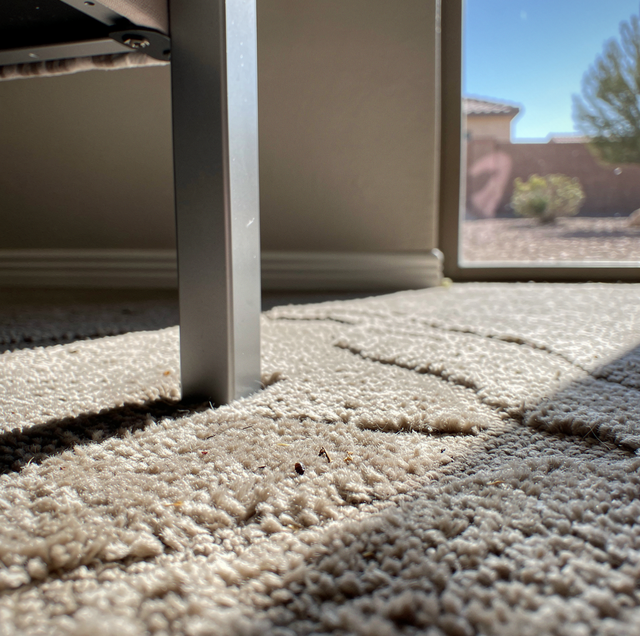
The dark speck sat on the beige carpet beside the bed leg, no bigger than a pinhead, and it only showed up because a phone flashlight was sweeping the floor for a dropped earring. It could be a crumb, a bit of lint, a snip of dark thread, or the first sign of bed bugs. Carpet runs under every bed, couch, and chair in a room, so the floor is a fair place to wonder about, but the answer depends on which part of the carpet the speck is on.
Where Bed Bugs Choose to Rest
Bed bugs spend the day hiding and come out to feed while people sleep or sit still. When they hide, they pick a gap that touches them on both sides. An adult is about the size of an apple seed, roughly 3/16 to 1/4 inch long, and flat enough to slide into a crack as thin as a credit card.
That preference explains where they settle: mattress piping and seams, the joints of a bed frame, the back of a headboard, the seams and cushion gaps of a couch or recliner, the folds of curtains. All of these sit close to where a person lies or sits, so a resting bug has a short walk to its next meal and cover on every side while it waits.
Hold that picture in mind when you look at a floor. Whether a bug can be on carpet is settled: it can walk across it. The better question is whether carpet gives a bug what it hides for.
Carpet Pile: What It Offers and What It Lacks
Open carpet is a field of upright fibers with air between them. A bug can climb into that pile and grip it, so it can be found there. What open pile does not supply is a tight, enclosed gap pressing against the bug from both sides. The fibers flex whenever anything crosses them, and nothing roofs the bug in.
A bug on open carpet, in the middle of a room or a few feet from the bed, can simply be crossing between a hiding place and a person. Bed bugs are wingless and travel on foot; in a carpeted room, the carpet is the road. Crossing a floor is different from living in it.
None of that rules out a stray bug resting in the pile, and it does not make the floor safe to ignore. It describes where the odds lie: the tight spots near the sleeping area draw bugs first, while the open floor draws fewer.
The Edge Along the Baseboard and Under Furniture Legs
Where carpet meets the baseboard, the picture changes. The carpet rises against the wall trim, and a narrow seam can form along that line. A seam like that can give a bug the tight, covered space open pile lacks, and it runs along the same wall a headboard or couch stands against.
Furniture legs matter for a simpler reason: they connect the frame to the floor. A bug resting in the bed rail only has to step down a few inches to reach the carpet beside the leg, so a speck right at a leg, like the one in the opening, sits one step from the frame. A find at a wall edge or beside a leg carries more weight than one in the center of the room.
None of this makes the carpet the nest. The edge is a place where bugs can rest or pass through, and it gets checked with the rest of the room. The baseboards are part of the treatment in every room of the home, along with the beds, couches, recliners, and every other piece of furniture, so the line where floor meets wall is part of the job from the start.
A Bug or Spot on Carpet Points Back to Something Nearby
A bug walking on carpet came from somewhere, and the furniture within a few feet is the first place to question: the bed, the couch, the frame, the headboard. A bug in the open can be a feeder crossing the floor, or one jostled loose when someone sat down or climbed out of bed. The carpet is where it was caught, not where it lives.
Dark spots work the same way. Bed bug spotting is dried droppings, and it collects near where bugs rest, so a cluster on the carpet beside a bed leg points more toward that frame than toward the carpet fibers. A single speck is weaker evidence than a cluster. Lint, dirt, and the droppings of other insects can leave dark marks too, and a carpet beetle can explain a find as well, which is why a flashlight search of the real hiding places settles more than the speck does.
One bug or one speck tells you where to look. It does not tell you how far things have spread. It can be a lone traveler who arrived with a bag or a jacket, or the visible edge of a group resting on the bed or couch. One find cannot say which, and guessing from the floor alone can send the cleanup in the wrong direction.
Leave the Floor Alone Before the Inspection
The urge after a find like this is to start acting: shove the bed aside, scrub the spot, throw something out, sleep in another room. Each of those can scatter bugs into new rooms or erase the evidence an inspection needs, since bugs travel along on clothes and belongings.
Leave the speck where it is and the bed where it stands. John does the inspection himself, starting with a flashlight search in the room of concern, and it is free. If the find is in a bedroom, he works through the bed, the couch, and the baseboards. When it is bed bugs, the treatment covers the whole home, and everyone, pets included, is back in that night after 4 hours out.
A bug on the carpet is a reason to look, and the looking goes best with someone who knows where bugs rest. The floor is where the evidence landed. The furniture and the baseboards are where the answer sits.
Frequently Asked Questions
No. They have no wings and cannot jump, so a bug on the floor got there by crawling, being shaken loose, or being carried. A bug that fell from a bed rail and a bug that walked across the room both end up looking the same on the carpet.
In the open room, the pad is pressed flat between the carpet and the floor, which leaves little room for a bug to work its way in. Along the wall, where the carpet edge is tucked against the baseboard, a bug can work in under that lip.
Yes. A clear close-up can be texted to the same number used for calls. A photo helps John tell what he is looking at, but a dark mark on carpet cannot be confirmed from a picture alone, so the in-home search is what settles it.
Eggs are about 1 mm in size and pale, making them hard to see on any surface. They are laid where the bugs rest, so the tight spots near the bed and furniture are where they show up. Their hatching time is why the treatment has a second visit.
No. The floor covering is not what brings them in. A hard floor leaves a crossing bug in plain view, while carpet pile can hide one as it crosses, so a carpeted room may be slower to yield a sighting.
It adds a second edge. The underside of a loose rug and the fold where its border meets the carpet create a flat, covered gap at floor level, so the edge of a rug beside the bed is the same kind of spot as the strip along the baseboard.
Get a free in-home inspection — John checks the bed, the furniture, and the baseboard edges in the room where the speck turned up, and tells you plainly if it is something else. Bed Bugs Arizona serves Phoenix and towns across Arizona. Call 623-451-0541.