

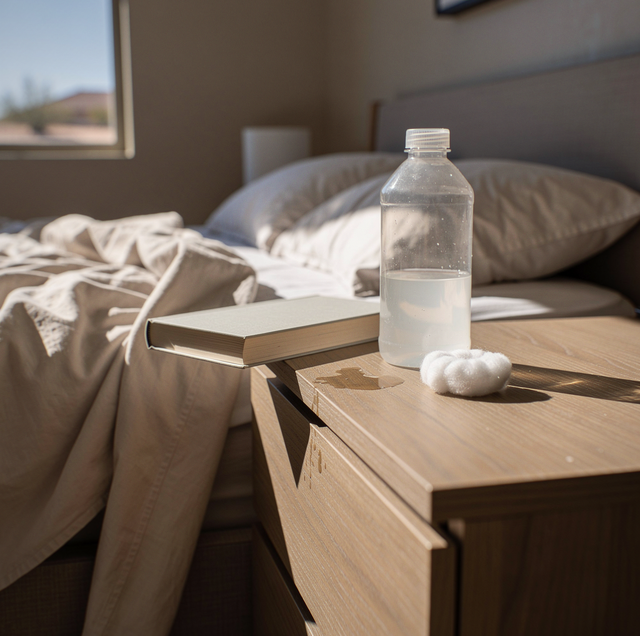
Half a bottle of rubbing alcohol stands on the nightstand next to a cotton ball that has dried stiff, and the sharp smell still hangs over the bed the next morning. Last night it felt like the fastest fix in the house: a bug on the sheet, a soaked cotton ball, then a few passes of spray along the mattress edge for good measure. Alcohol can kill a bed bug if it soaks. It does nothing to the bugs it never touches; it leaves nothing behind once it dries; and it poses a fire hazard in the one room where everyone sleeps.
What Alcohol Does to the Bug It Wets
Rubbing alcohol is a solvent. When it lands on a bed bug, it can strip the thin, waxy layer that coats the bug's outer shell, which is what keeps the bug from losing water. With it gone, the bug dries out, and a bug that stays wet long enough can die. That is the whole mechanism, and it runs only while the liquid is on the insect.
Even a direct hit is not a sure kill. A bug sprayed in the open can survive the dose, especially when the spray beads on its back for a moment before flashing off. The evaporation that makes alcohol feel clean and quick is the same thing that limits it: within minutes the surface is dry, and a bug that walks across it an hour later meets nothing at all.
That gap separates a contact product from a treatment. The whole-home treatment leaves a residual that keeps working long after the visit, so a bug that was hidden on treatment day still meets it when it comes out to feed. Alcohol has no second chance built in. The cotton ball got one bug, and the spray got whatever happened to be on the surface as the mist fell.
The Bugs and Eggs a Spray Never Touches
Bed bugs spend their resting hours packed into gaps about as thin as a credit card. On a bed, that means the piping and seams of the mattress, the underside of the box spring where the fabric is stapled to the frame, and the joints where the side rails meet the headboard.
A mist of alcohol lands on the outside of all of that. It wets the fabric face of a seam while the fold inside stays dry. It runs down the side of a bed rail without reaching into the bolt hole. Whatever is tucked just inside the fold stays dry while the surface looks soaked.
Eggs are a separate miss. A female glues her eggs into those same protected gaps, where they stay put until they hatch. An egg that never gets wetted hatches on schedule, and the young bug that crawls out finds a bed with no trace of the alcohol left on it. So a night of spraying can be followed by a quiet week that feels like a win, then fresh activity when the next batch hatches.
There is also the rest of the home. Bed bugs move with the people they feed on, so a couch, a recliner, or the bed in the next room can be carrying them while the alcohol went only where the first bug turned up.
Fire Risk From Alcohol Vapor in a Bedroom
Rubbing alcohol catches fire easily, and so does the vapor it emits. That smell in the morning is the vapor itself, still lifting off the bedding and the mattress. Sprayed across a bed, the liquid spreads into a large wet patch of exposed fabric, a poor arrangement for anything flammable: more wet surface means more vapor, and fabric gives a flame something to keep burning once it starts.
A bedroom holds more ignition sources than it seems to. A candle, a space heater, a cigarette or lighter, a hair dryer, and even the small spark from flipping a light switch or pulling a plug from an outlet can be enough to light vapor that has collected in the air. House fires have started exactly this way, with alcohol soaked into furniture and a flame nearby.
The rule is plain: rubbing alcohol does not go on a bed, bedding, furniture, carpet, or anywhere else inside the home, and it never goes near a flame, spark, heater, or anyone smoking. No amount of care with the bottle makes a soaked mattress a safe place to sleep beside a heater.
If anything sprayed with alcohol catches fire, do not try to smother a burning mattress or couch yourself. Get everyone out of the house, close the door behind you, and call 911 so the fire department can handle it.
How Scattered Bugs Make the Inspection Harder
Spraying can also move bugs. A bug that is wetted but not killed, or that senses the disturbance around the bed, can leave the seam it was in and crawl somewhere quieter: the nightstand, the baseboard, the couch, the next bedroom. Pulling the sheets, flipping the mattress, and wiping the frame down add to that movement.
An inspection reads the home by the signs bed bugs leave behind: the bugs themselves, dark spotting, eggs and shed casings, and how many spots carry them. When the bed has been soaked and worked over, those signs are spread thinner and turn up in places nobody would check first. That can make a real problem look smaller than it is, or put bugs into rooms that were clean before the spraying started.
Then there is the furniture. People who spray a mattress and still find bugs sometimes decide the mattress has to go, and drag it through the house and out to the curb. That carries bugs along the hallway, can hand them to the neighbors, and throws out a mattress that could have been treated and kept.
Steps to Take Until the Inspection
Stop spraying, and do not swap the alcohol for another product. Leave the bed, the couch, and everything else where they are, and do not take anything outside or throw it away. Keep sleeping where you have been sleeping; moving to the couch or a guest bed can bring bugs along.
Air the room out with the windows open, and keep candles, heaters, and smoking out of that room until the bedding is dry and the smell has gone.
If you caught a bug, John can look at it at the inspection, and a clear, close-up photo can be texted ahead of time.
The free inspection is where the real answer comes from: whether it is bed bugs at all, how widespread the problem is, and what prep the home needs. If treatment follows, it covers the whole home, applied by hand to every room, the furniture, and the baseboards. Everyone, pets included, stays out for 4 hours while it dries, and you sleep in your own bed that night. A second visit about two weeks later catches the bugs that hatch from eggs out of reach the first time, and the job carries a one-year warranty.
The alcohol did the one thing it can do: it killed what it soaked, for as long as it stayed wet. Everything it missed is still in the seams and joints, waiting out the smell, and finding those spots is work no bottle can do.
Frequently Asked Questions
It can. Alcohol dissolves shellac and softens some lacquer finishes, so a wooden headboard or nightstand can come out of a spraying with dull, cloudy, or sticky patches. On some upholstery and leather, it can also lift dye and leave a pale ring where the spray pooled.
No. Bed bugs find a sleeping person by the carbon dioxide in their breath, and the warmth of their body, and the smell of alcohol does nothing to hide either one. Once the wipe has dried, the frame is as open to them as it was before.
Foam and padding soak up liquid and release it slowly, so a mattress keeps releasing vapor well after the fabric face feels dry. That vapor is heavier than air, so it settles low and can drift along the floor toward a heater or a pilot light some distance from the bed.
Very little. A bed bug comes out mainly to feed; a meal takes roughly 3 to 10 minutes, and then it goes back into hiding to digest for several days. The rest of its life is spent tucked in a gap, so a spray aimed at what can be seen reaches few of them.
Yes. Tell him which rooms and pieces of furniture got sprayed and roughly when. What you tell him decides where he looks, so a sprayed couch or a second bedroom gets searched along with the bed where the first bug turned up.
Cap it tightly, and cap any spray bottle it was poured into. Store it away from the bedroom, out of reach of children, and well clear of stoves, heaters, candles and direct sun. A loosely capped bottle keeps giving off vapor wherever it sits.
Let John check the bed and the rooms around it for free — find out where the bugs went after the alcohol, before anything else gets sprayed. Bed Bugs Arizona serves Phoenix and towns across Arizona. Call 623-451-0541.