

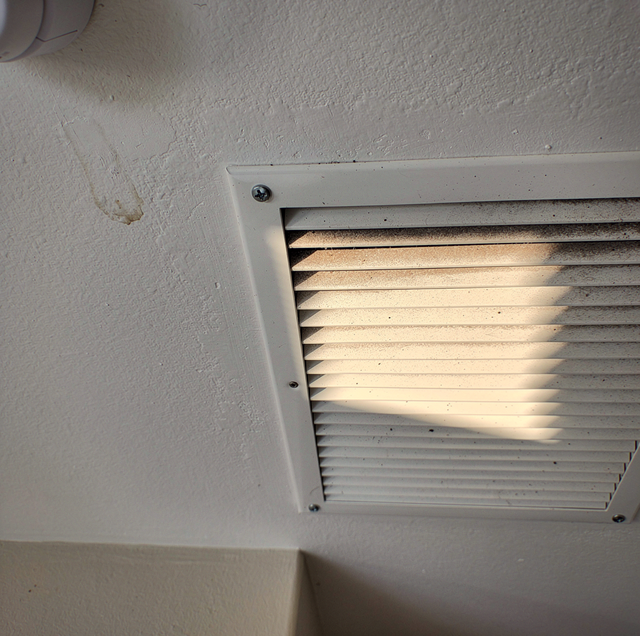
One slat on the ceiling register above the bed carries a faint gray line of dust, and the person on the step stool studying it has started to wonder whether something is living behind the grille. That line is dust, the same soft gray that settles on any ledge in a house. The worry behind it is reasonable, though, because a vent is a dark opening, and bed bugs are known for dark openings. The short answer is that vents and ductwork are not where bed bugs normally live. They rest near the people they feed on, and a vent only enters the picture when a problem has grown large.
What a Bed Bug Wants From a Resting Spot
A bed bug feeds on a sleeping person, then withdraws to rest until it is hungry again. It withdraws to a tight gap with a host close enough to reach on the next trip, which is why mattress piping and seams, the joints of a bed frame, the back of a headboard, and the seams of a couch or recliner are where it rests.
That pairing explains the order in which a search goes. The mattress, box spring and frame come first, then the places where people sit, such as couches, recliners and desk chairs. A bug that has a good resting place beside its meal has no reason to travel. Every extra foot is a trip across open floor or wall, in the open, with a person who may wake up.
Why a Vent Is an Unlikely First Stop
Compare a register with a mattress seam. The seam sits beside the person a bug feeds on. A register sits on a wall or ceiling, sometimes well away from the bed, and its slats are open to the room. Behind the grille, a duct is a long channel with nobody sleeping inside it. It offers a bug neither a snug gap nor a meal.
Bed bugs get around by crawling or by riding on people, belongings, and clothes, and crawling to a vent means leaving the bed that feeds them. Air moving through a duct does not carry them along, so a bug reaches a vent only on its own legs.
For the same reason, the picture of a hidden colony living in the ductwork and sending bugs out to the bedrooms does not fit how these insects live: they settle beside a host, and a duct holds none. When bugs are found, the bed and the furniture around it are the problem, and that is where the search begins.
When a Register Becomes One More Gap
The picture shifts when the problem is large. In a heavily infested room, bed bugs turn up farther from the bed, and the gaps they use are no longer only the obvious ones. In that situation, a register near the bed can be one more gap that a bug rests in.
Two things keep that in proportion. First, a bug found near a vent in a heavy problem is a sign that the bed and furniture are already crowded, not a sign that the vent is the source. Second, in a light problem, the same register is just a register. Dust on a slat, a dead insect on the ledge, or a bug that wandered up a wall does not turn a vent into a nest. How far a problem has spread is determined by the whole room during an inspection, and a single vent cannot tell you.
What to Leave Alone Around Vents
The urge to take the cover off and look inside is strong, particularly when the register is right overhead. Leave the cover on. Unscrewing a grille, reaching into a duct, or pulling furniture away to get at a floor vent moves things around before anyone has looked, and nothing should be moved or taken apart before the inspection. Moving things can carry bugs from the spot where they were resting to places where they were not.
The same goes for spraying toward a vent or running a store product around it. Those products do not solve a bed bug problem, and they can scatter the bugs that are present. If the dust, a dark speck, or a bug caught your eye, leave the spot as it is and tell John about it. What you saw and where it is worth more to him than a cleaner grille.
How the Inspection Settles It
John Taylor, the owner, does the free in-home inspection. He looks at the places where bed bugs rest first, which means the bed and then the furniture people sit on, and he reads what he finds: live bugs, dark spotting, eggs, shed skins. From that he can tell how far the problem reaches.
The plan is made at that visit. Which areas need attention is John's call once he has seen the room, not something to guess from a photo of a grille or a line of dust. If the vent matters in your home, he is the person who will say so. If it does not, the inspection will say so, and you can stop worrying about it.
If bed bugs are found, the treatment is a whole-home job done by hand, and it carries a one-year warranty.
Keeping the Search Close to the Bed
Worry about a vent is a sign that something has already caught your eye, and that is a good reason to call. The gray line on the slat may be only dust. The reason you looked up at all may be a spot on a sheet or a bug on a headboard, and those sit at the bed. Start your thinking there, leave the grille alone, and let someone who has seen the real thing decide how far the problem reaches.
Frequently Asked Questions
The seam where a cover's frame meets the wall or ceiling is a thin, shaded gap that bed bugs use, so in a heavy problem, a bug can rest there. One found in that seam is sitting on the room side of the cover, not living in the duct behind it.
Where a bug is found shows where it was walking when you saw it, not where it came from. A bug on a wall can be crossing between a resting spot and the bed. The bed and furniture are checked first, either way, and John works out the rest during the inspection.
Do not wipe them off. Wiping removes what John reads at the inspection, and a wiped cover looks the same as a clean one. Leave it as it is, tell him what you saw and where, and he decides what it means once he has looked at the whole room.
The two sit differently. A floor register has a ledge and slots that a crawling bug can reach without climbing, whereas a ceiling register requires climbing up the wall and across the ceiling. Neither is where bed bugs normally live; the difference bears only on how easily a bug from the bed could reach one.
A hallway is a place people pass through, not a place they sleep or sit, so a bug found there may be in transit between rooms, carried on clothing or belongings, or crawling from one room to another. Note which rooms open onto that stretch of hall when you call.
Leave things as they sit now and do not go any deeper into the vent. Tell John that the cover was off and what you saw, so he knows the vent has already been handled before he arrives.
Follow your suspicion to a free inspection — John checks the bed and furniture first and tells you whether the vent matters at all. Bed Bugs Arizona serves Phoenix and towns across Arizona. Call 623-451-0541.