
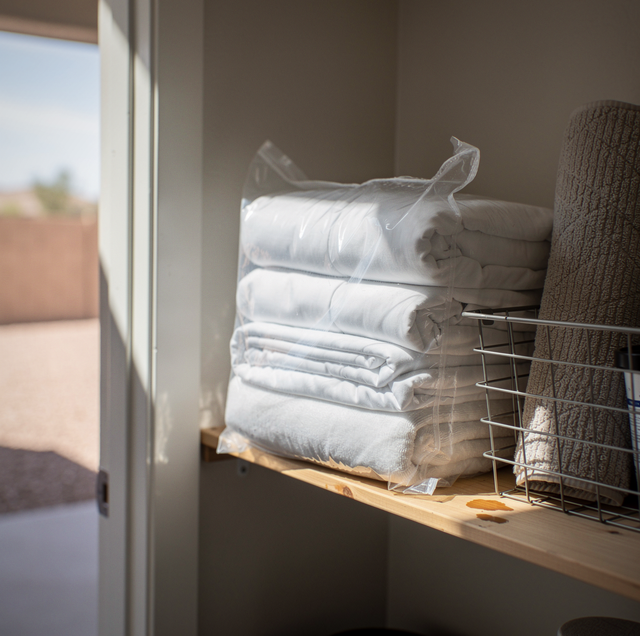
Pressed snug against a stack of clean towels, the knot on the first bag holds, and a palm runs along the side of the plastic feeling for any give where it might have parted. It is a fair test for a fair worry. The load was washed and dried the night before; it now waits in a hallway closet, and the second visit is still ahead. A closed bag holds crawling insects. Bed bugs have no wings and do not jump, so a bag with no opening between its inside and its outside gives them no route out. Trouble starts only where the plastic has an opening, and openings come from a short list of causes.
Why Only Washed and Dried Items Go in a Bag
A bag is a container. Whatever is inside when the neck is closed stays inside, so the order of the steps matters. Closing a clean load keeps it clean. Closing an unwashed item seals whatever rides on it inside, and that bag then sits in a home where one tear or one loose knot lets the contents back out.
The prep sequence is wash, dry on high heat, then bag. John points out which linens and clothes go through that sequence, and the inspection settles the list for your home. Only items on that list get bagged.
What a Sealed Bag Can and Cannot Hold
Intact plastic with a fully closed neck blocks a crawling bug in both directions. Nothing walks through the film, and nothing walks through a closure that has no gaps. A gap that looks harmless from across the room is still a gap, so a bag that seems closed deserves a closer look at the neck.
What the bag holds: Crawling bugs inside it and outside it, for as long as the plastic and the closure stay intact.
What the bag cannot do: Reach past its own walls. It protects the load and nothing else in the house. It also does not protect once it is opened in a room with bugs, because a clean item pulled from a bag is exposed to the room like anything else in it.
The outside surface of a bag is part of the home. A bug can crawl onto the plastic as easily as onto a shelf, which is harmless while the bag stays shut and a problem once it is opened.
How Long a Bug Can Wait Out a Sealed Bag
Washed loads stay sealed until after the second visit, about two weeks after the first.
Bed bugs can go a long stretch between meals, and the length of that stretch shifts with room temperature: cooler rooms slow them down, and warmer rooms speed them up. Nobody can say how much time a particular bug has left, so a load is not opened on a guess about starvation. The second visit is the checkpoint.
Torn, Open and Loosely Tied Bags
An opening in a bag comes from one of a few places:
- A tear: A corner of folded fabric, a zipper pull or a belt buckle pressing through the plastic, or an animal pulling at the bag.
- A stretched neck: Plastic that has been tied, untied, and tied again loses its grip, and a neck that was twisted but not closed leaves a channel.
- An overfilled bag: A load pushed past what the bag can close around leaves the neck strained and gapped.
- A hole at a seam or the base: The weak points of a bag when the weight of the load sits on them.
A torn bag is an open bag, no matter what the knot looks like. A bug does not need a large hole; it needs a path wide enough for its body.
If a bag has been open for any length of time, the contents have been exposed to the room. Ask John whether that load needs another wash and dry before it is rebagged. Call him before treatment day whenever a step runs into trouble; a failed bag is one such step.
Nothing Goes in a Bag Before the Inspection
Until John has looked at the home, the instruction is to do nothing. That covers bagging as much as anything else. Gathering bedding, clothes, and stuffed items from around the home and sealing them into bags before the inspection moves them from where they are to wherever you carry them. An unwashed load sealed up early can hold live bugs and eggs that end up in a new room.
Throwing out a mattress or couch in a bag is a related reflex. Leave furniture where it is. The inspection decides what is affected and how much prep the home needs, and some of what gets discarded could have been kept.
Bug bombs and store sprays do not belong anywhere near a bagged load, and they are not part of the prep either.
Whatever was clean when the neck was closed remains clean when the neck is opened, provided the order was correct, the closure had no gap, and the bag was left alone until the work was done.
Frequently Asked Questions
No. A bed bug cannot chew, so plastic stops it unless an opening already exists, such as a tear, a stretched neck, or a pinhole. The same holds for anything that hatches inside a fully closed bag: a newly hatched bug is shut in just as completely as the adult that laid the egg.
Yes. Fabric sealed while still damp holds that moisture against itself, and over two weeks in a closed bag it can turn musty or start to mildew. A load that is fully dry when the neck is closed avoids that.
Ask John at the inspection. Clutter has to be cleared out of the areas he treats, so where the bags wait is part of the prep he goes over for your home.
Once John has completed the service, the bags can be opened and the items put away. If a bug turns up after the clothes are back in the drawers, call John, and he will come back promptly to deal with it.
No. The bag only holds. The treatment is applied to the home, to the rooms, furniture, and baseboards, and not to what is sealed in a bag, so the wash and the high-heat dry before bagging are what make a load ready to be closed up.
Leave the bag sealed and call John. Opening it lets the bug out into the room, while a closed bag keeps it in one place. A clear close-up photo can be texted to him, taken through the plastic, so he can look at it before deciding what the load needs.
Have John inspect your home for free — you will learn exactly which linens and clothes to wash and bag, and nothing gets sealed that should not be. Bed Bugs Arizona serves Phoenix and towns across Arizona. Call 623-451-0541.